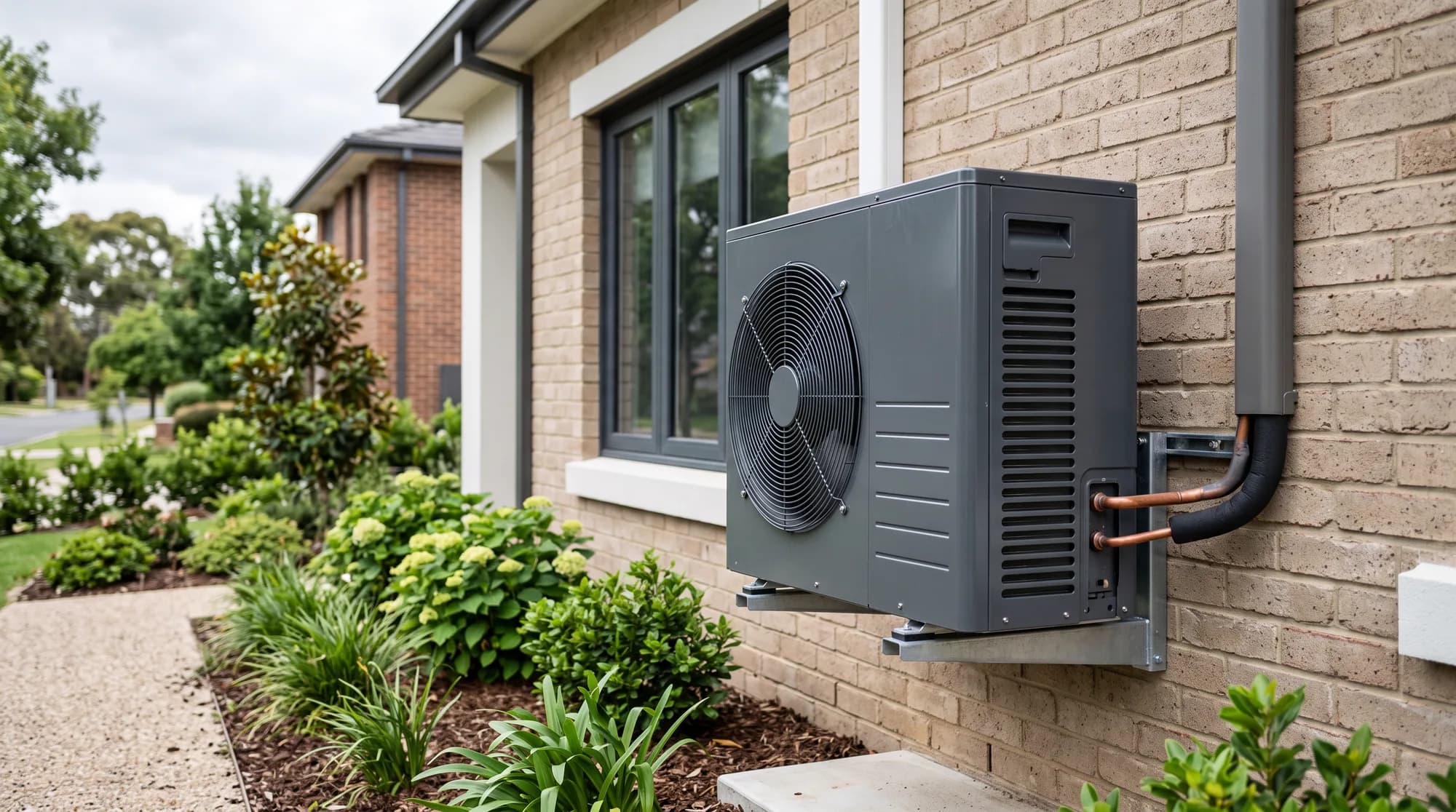
The federal Section 25C Energy Efficient Home Improvement Credit expired December 31, 2025, after the One Big Beautiful Bill Act, signed July 4, 2025, ended the credit ahead of its original 2032 expiration under the Inflation Reduction Act.
For homeowners, that means the former 30% heat pump tax credit should no longer be included when estimating a 2026 installation. However, state or utility rebates may still reduce the upfront cost, depending on household income, location, equipment, program rules, and available funding.
Federal 25C Heat Pump Credit Ends Dec. 31, 2025
For qualifying heat pumps placed in service during 2025, Section 25C provided eligible tax credit claims capped at $2,000. The credit is nonrefundable, meaning it could reduce federal tax liability but could not exceed the taxpayer's eligible tax liability.
Homeowners can review the applicable 2025 requirements through the IRS guidance on the residential energy credit.
Qualifying heat pumps also had to meet applicable efficiency requirements. For specified claims, homeowners were required to retain the manufacturer's certification and four-character Qualified Manufacturer Identification Number (QMID).
Documentation list for a 2025 claim:
- Final contractor invoice
- Proof of payment
- Installation or completion date
- Manufacturer's certification
- Four-character QMID
- Equipment model and serial number
- Efficiency documentation
- Installation contract
- Completed Form 5695 and supporting tax records
2025 Heat Pump Purchases May Still Miss the Credit
The deadline is based on when the system was placed in service, not when it was purchased. A heat pump bought in December 2025 but installed and ready for use in 2026 does not qualify for the expired 25C credit. Paying a deposit, signing a contract or receiving delivery before December 31 did not itself establish eligibility.
| 2025 project status | 25C eligibility |
|---|---|
| Purchased and installed in 2025 | Potentially eligible |
| Purchased in 2025, installed in 2026 | Not eligible |
| Deposit paid in 2025, installation in 2026 | Not eligible |
| Equipment delivered in 2025, installation in 2026 | Not eligible |
What Federal Heat Pump Rebates Are Available After 25C Expired?
The expiration of 25C did not eliminate the federal Home Energy Rebates.
The two major programs are Home Electrification and Appliance Rebates (HEAR) and Home Owner Managing Energy Savings (HOMES). Both are federally funded but administered through states, territories and Tribal governments. Availability and rollout depend on how and when each jurisdiction implements its program, so homeowners should check current local program status rather than assume a rebate is available.
The US Department of Energy provides current information on the Federal Home Energy Rebates program and state implementation.
HEAR Provides Up to $8,000 for Eligible Heat Pumps
The HEAR program provides point-of-sale rebates for qualifying electrification upgrades for eligible low- and moderate-income households.
A qualifying heat pump can receive up to $8,000. The broader $14,000 HEAR limit applies to the household's combined eligible upgrades, not the heat pump alone.
Generally, low-income households at or below 80% of area median income (AMI) may qualify for rebates covering up to 100% of eligible project costs. For moderate-income households between 80% and 150% of AMI, the rebate can cover up to 50% of eligible costs, subject to the applicable technology caps.
For example, if a qualifying project is eligible for the 50% benefit, a heat pump with an $8,000 maximum rebate could receive up to $4,000 toward eligible costs. That $4,000 is not a guaranteed rebate. The actual amount depends on the project, equipment, and applicable state program rules.
| Eligible HEAR upgrade | Maximum rebate |
|---|---|
| Heat pump for heating/cooling | $8,000 |
| Electrical panel/service upgrade | $4,000 |
| Electrical wiring | $2,500 |
| Heat pump water heater | $1,750 |
| Insulation, air sealing and ventilation | $1,600 |
| Electric stove, range or oven | $840 |
| Electric heat pump clothes dryer | $840 |
| Maximum combined rebate | $14,000 |
HOMES Rewards Whole-Home Energy Savings
The HOMES program works differently from HEAR. Instead of focusing on a specified appliance and household income, HOMES rebates are tied to energy savings from qualifying whole-home efficiency improvements.
The program can apply to homeowners regardless of income, subject to state program requirements. Eligible projects may include heating and cooling upgrades, building envelope improvements, water heating and other energy-efficiency measures.
Single-family projects can qualify for different rebate levels based on measured or modeled energy savings. A heat pump may be included in a qualifying retrofit, but buying a heat pump alone does not automatically qualify a homeowner for the maximum HOMES rebate.
Here's the breakdown under the federal framework:
- 20% to less than 35% modeled savings: up to $2,000 or 50% of project cost
- 35% or greater modeled savings: up to $4,000 or 50% of project cost
- 15% or greater measured savings: rebate based on the state's payment rate
- Low-income projects: higher limits may apply, reaching up to $8,000
State and Utility Rebates May Help Fill the Gap
With the federal 25C credit gone, state and utility incentives become more important for homeowners considering a heat pump in 2026.
As of August 2026, available programs can offer incentives ranging from hundreds to several thousand dollars. Federal Treasury information puts the potential range of available heat pump incentives at roughly $500 to $16,000, depending on location and program eligibility. These figures are not nationwide, and individual programs can change as funding is allocated or exhausted.
Some homeowners may also be able to combine or "stack" a state or utility incentive with an eligible federal rebate, which could further reduce the out-of-pocket costs of a heat pump installation. However, stacking rules vary by program, and some incentives cannot be combined or may impose additional conditions. Homeowners should confirm the rules with the program administrator before counting multiple incentives toward the installation budget.
Rebate Funding Can Run Out Before Homeowners Apply
The existence of a rebate program does not guarantee that funding remains available.
Many programs are first-come, first-served and may have limited funding or application windows. A program listed online may not be accepting applications when you're ready to install.
Homeowners should check the DSIRE database, state energy office and local utility before purchasing equipment. It helps to compare available state and utility incentives, but homeowners should verify the current eligibility, rebate amounts, and utility before including an incentive in their installation budget.
What Homeowners Should Do Before Buying a Heat Pump in 2026
The end of 25C means homeowners should no longer include the former 30% federal tax credit in a 2026 heat pump estimate. Instead, start by checking which incentives are currently available in your state and utility territory, then confirm that the specific heat pump and installation qualify.
Before signing an installation contract, verify:
- Available HEAR and HOMES funding
- Household income eligibility
- Equipment efficiency requirements
- State and utility rebates
- Incentive stacking rules
- Funding status
- Contractor participation requirements
- Required documentation and application deadlines
A residential HVAC contractor can help determine whether the proposed system meets applicable requirements, provide installation documentation and assist with rebate paperwork.