A federal appeals court upheld the U.S. Department of Energy's furnace efficiency rule in November 2025, requiring covered residential gas furnaces manufactured after December 18, 2028, to meet at least 95% AFUE. However, its future is unresolved because the underlying case is back before the D.C. Circuit.
The standard would require furnaces to use about 15% less energy than today's models, but its future remains uncertain after the Supreme Court vacated that appeals-court judgment and sent the case back for further review.
For homeowners, that does not mean there is a deadline to replace an existing furnace. The rule targets newly manufactured covered equipment, while the legal challenge remains unresolved.
Supreme Court Sends Furnace Rule Back to Lower Court
The dispute centers on a 2023 DOE rule that would raise the minimum efficiency for covered residential gas furnaces to 95% AFUE.
The D.C. Circuit upheld the rule in November 2025 after gas industry groups challenged DOE's authority to establish a standard that would effectively remove non-condensing furnaces from the market.
On June 8, 2026, the Supreme Court granted the industry groups' petition, vacated the D.C. Circuit's judgment and remanded the case for further consideration in light of the federal government's changed legal position.
The Supreme Court's action did not itself issue a final ruling eliminating the furnace standard. The case is back before the lower court, and the rule remains the applicable regulatory standard while that review proceeds.
DOE's Standard Would Raise the Furnace Efficiency Floor to 95%
AFUE, or Annual Fuel Utilization Efficiency, measures the share of a furnace's fuel that is converted into usable heat for the home.
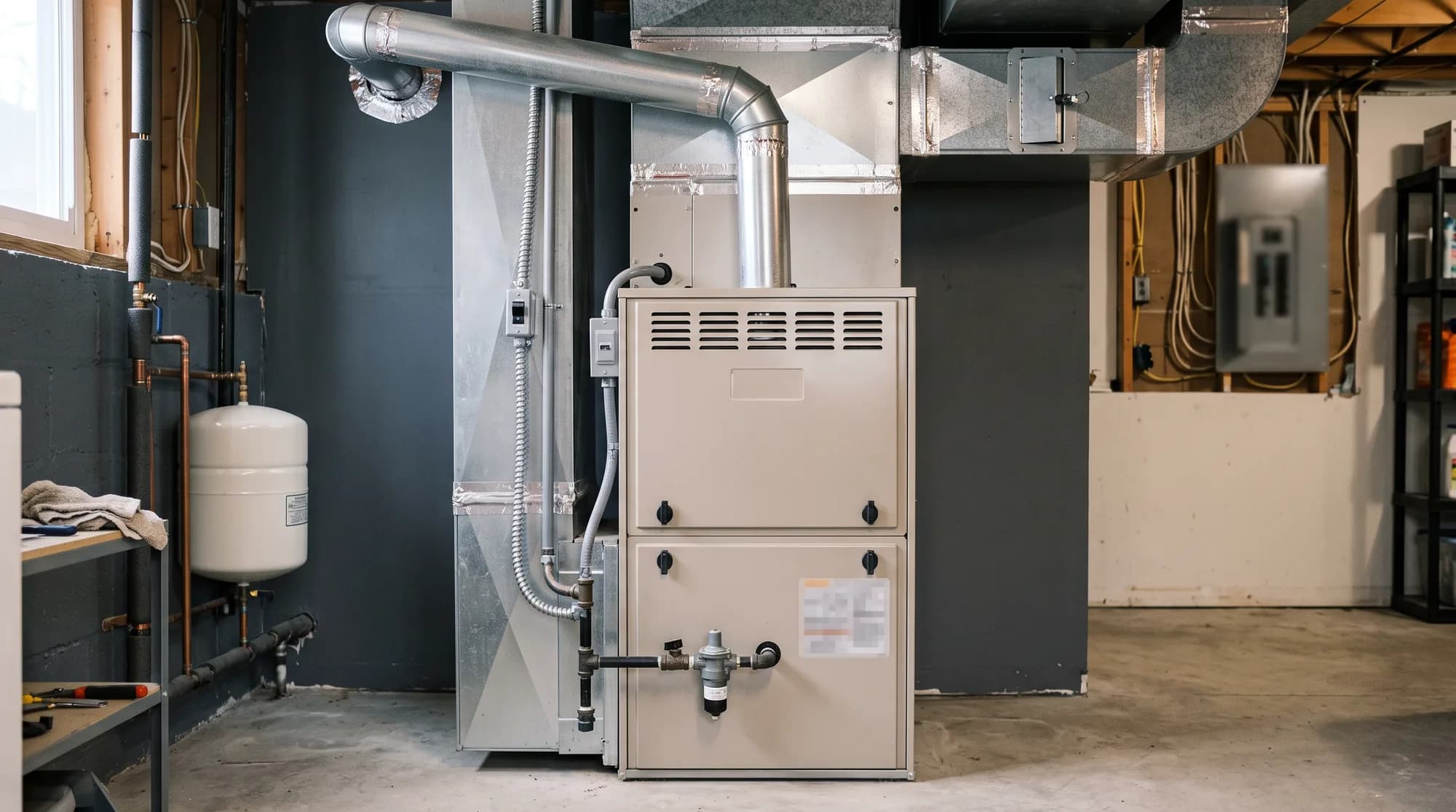
The US Department of Energy furnace efficiency standard would require covered non-weatherized residential gas furnaces and mobile-home gas furnaces manufactured after December 18, 2028, to achieve at least 95% AFUE. DOE says the standard is achievable with modern condensing furnace technology, which uses a secondary heat exchanger to recover additional heat from exhaust gases.
ACHR News reports that the new standard would require furnaces to use about 15% less energy than today's models.
That creates an important technology shift. Traditional non-condensing furnaces generally cannot reach 95% AFUE, so if the rule remains in effect, those models would effectively be eliminated from new production for the covered market.
DOE Projects $350 in Average Furnace Savings
DOE estimates average life-cycle savings of about $350 per affected furnace under the 95% standard. Industry coverage puts the average annual heating-bill savings at roughly $50, although actual savings will vary by household.
The efficiency standards would save consumers $24.8 billion in energy costs over 30 years. The department also estimates that the furnace standards would cut approximately 332 million metric tons of CO₂ emissions over the same period, equivalent to shutting off 24 gas power plants by midcentury.
The Federal Register describes this as average life-cycle-cost savings, not a guaranteed reduction in every homeowner's heating bill. Actual savings depend on factors such as fuel prices, climate, furnace usage and home efficiency.
HVAC Industry Warns 95% Rule Could Raise Retrofit Costs
The efficiency gains are not the only issue in the debate.
The Air Conditioning Contractors of America and the American Gas Association have warned that replacing non-condensing equipment with condensing furnaces can be difficult in some older homes and multifamily buildings.
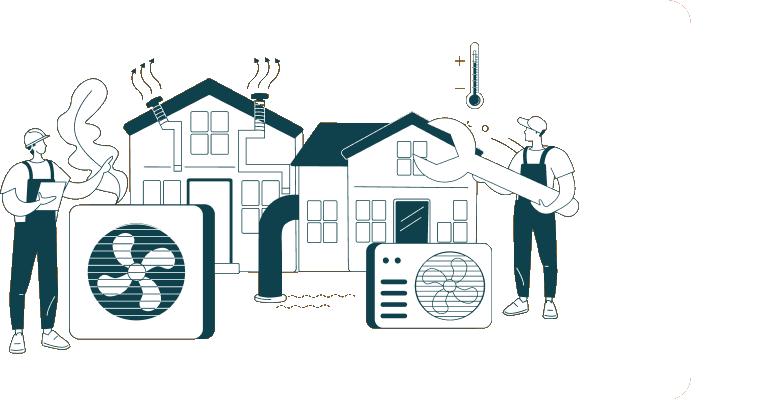
Traditional non-condensing furnaces can use existing vertical chimney or venting systems. Condensing equipment typically requires different venting and condensate management. Adapting an older property can therefore require additional work and expense, depending on its existing configuration.
Sean Robertson, vice president of membership, advocacy and events at ACCA, said retrofitting older homes and multifamily buildings for condensing equipment can be "costly, technically difficult, or even impossible under current building codes." He also said the issue can particularly burden low-income households.
ACCA has identified reversing the furnace ban as a top policy priority and has urged Congress and the administration to pursue options that could prevent the standard from taking effect.
Industry groups also argue that eliminating non-condensing furnaces from new production could reduce equipment and technology choices for homeowners and contractors, particularly where existing building infrastructure makes a condensing installation more complicated.
Non-Condensing Furnaces Could Remain Available After 2028
The December 18, 2028 date applies to the manufacture of covered furnaces. It does not require homeowners to remove an existing non-condensing furnace from their homes by that date.
Existing equipment can continue operating. Furnaces manufactured before the compliance date can also remain in inventory and be sold after December 18, 2028, because the standard is tied to the date of manufacture and does not establish a separate sell-through or installation deadline.
So homeowners should not interpret the rule as a reason to replace a functioning furnace now.
If an older furnace needs frequent repairs or is nearing the end of its useful life, replacement may still make sense. But that decision should be based on the equipment's condition, operating costs and available replacement options, not an artificial 2028 countdown.
What the Furnace Rule Means for Homeowners
If your current furnace is working reliably, there is no need to replace it solely because of the 2028 rule.
If you expect to replace it within the next one to two years, talk with an HVAC contractor about whether a condensing furnace makes sense for your home now. Ask about existing venting, condensate drainage, installation requirements and the total project cost.
For older homes and multifamily properties, those factors can be just as important as the furnace's AFUE rating.
The smarter approach is to plan around the condition of your current system and the equipment that fits your property, rather than rushing to meet a 2028 date that remains subject to court and regulatory changes.
Before deciding, compare your current system's condition, installation requirements, and expected furnace replacement costs with the available options.