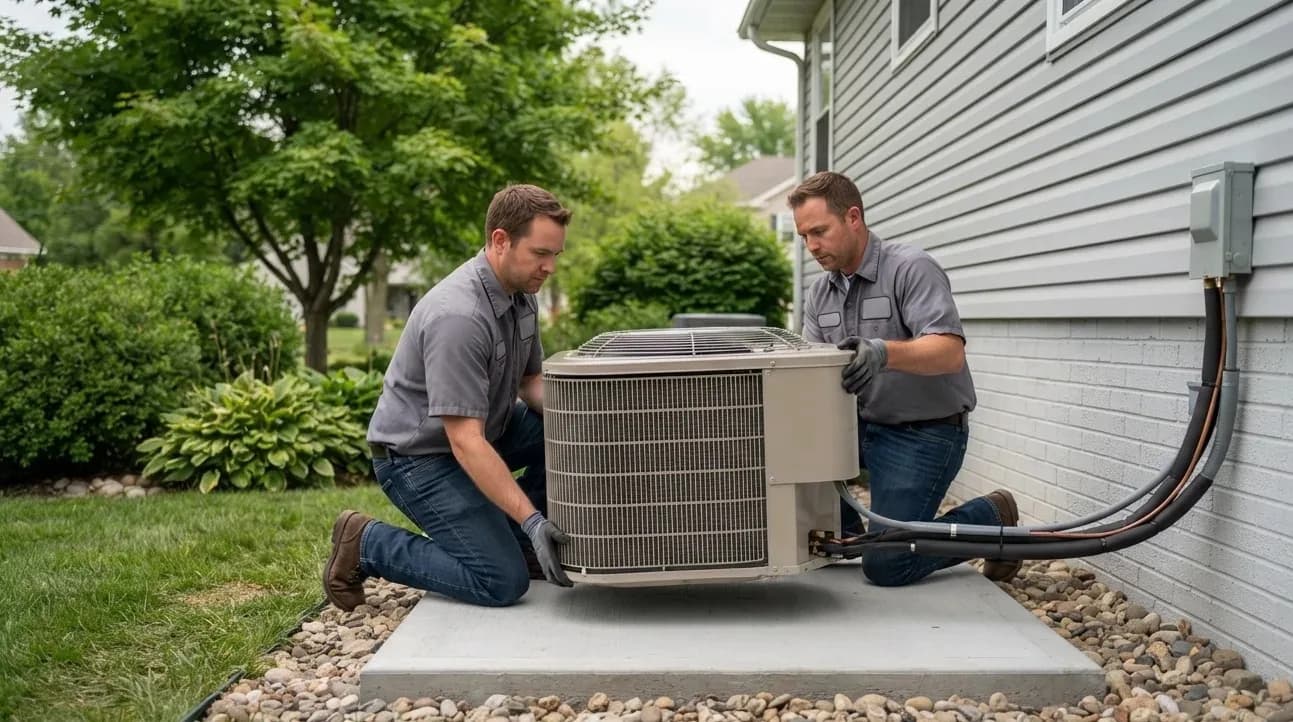
The AC unit itself is only part of the cost. The air conditioning installation cost typically ranges from $140 for a simple window or portable unit to more than $8,000 for central systems, depending on the system and how much work your home needs. Ductwork, labor, electrical work, permits, accessibility and other requirements add several thousand to the final bill.
AC Installation Cost by Type
The cost to install air conditioning varies considerably by system type. Central AC generally involves more installation work than a window unit, while ductless mini-splits do not need traditional ductwork.
| AC Type | Typical Install Cost | Full Guide |
|---|---|---|
| Central AC | $3,800–$8,000 | [Central Air Conditioning Cost] |
| Ductless mini-split | $700–$14,500 | [Mini Split / Ductless Cost] |
| Window / portable | $200–$550+ | [Window / Portable AC Cost] |
* These are directional figures rather than guaranteed 2026 prices.
Installation costs vary by location, system configuration, home access, and required work. For example, HomeAdvisor currently reports professional AC installation at $3,887-$8,073 for a 2000-square-foot home with existing ductwork, while its current mini-split guide gives a much wider $700-$14,5000 range depending on the system and installation.
Adding new ductwork can substantially increase the project cost. Window and portable units, meanwhile, may require little or no professional installation.
Adding new ductwork to an AC installation can substantially increase the project cost. On the other hand, window and portable units may require little to no professional installation. For a quick price comparison of equipment, you can check our AC Unit Cost Guide [Internal Link].
What’s Included in AC Installation?
The air conditioning installation cost covers more than placing the equipment. Depending on the AC type and condition of the home, installation can involve several separate tasks.
Setting Up the AC Unit
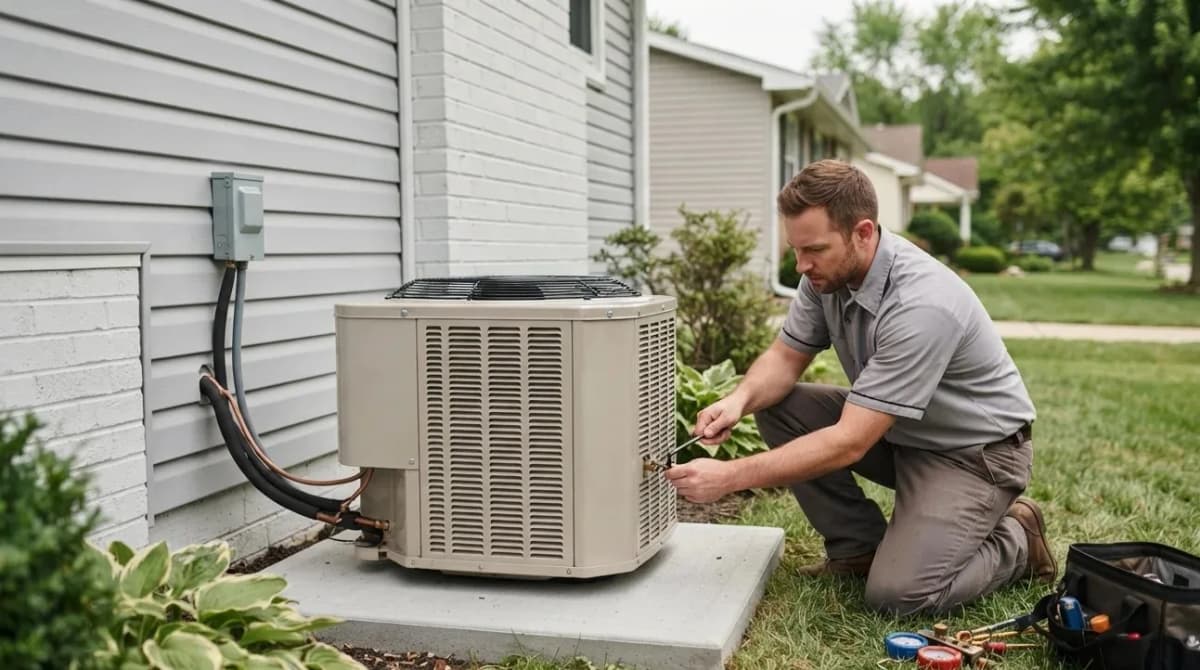
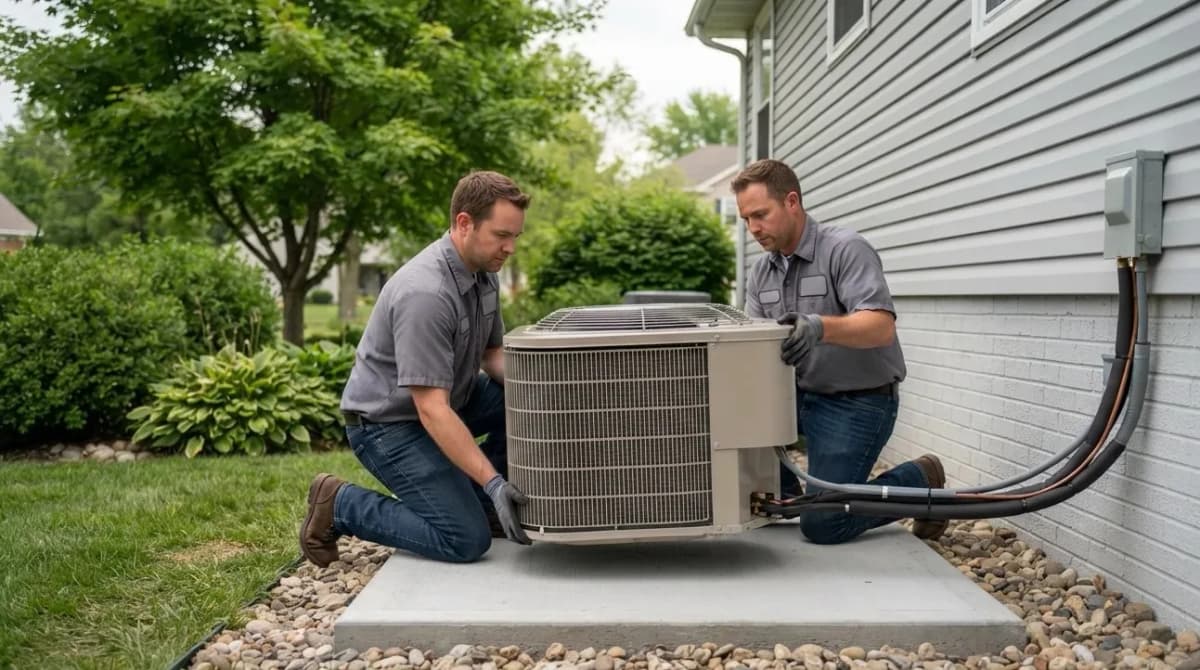
For central AC, installation typically involves positioning the outdoor condenser and connecting the indoor equipment. HomeAdvisor estimates $300 to $1,600 for AC installation labor, based on typical HVAC rates of $75 to $200 per hour and four to eight hours of installation time.
Installing or Connecting the Line Set
Central and ductless systems use refrigerant lines to connect indoor and outdoor components. If a new line set is needed, HomeGuide estimates replacement costs of about $200 to $650, depending on the length and location of the line.
Electrical Work
AC installation may require a dedicated circuit or disconnect. A new electrical circuit typically costs $100 to $150, while an AC disconnect box costs about $150 to $500 with installation, according to current HomeGuide estimates.
Drain and Condensate Connections
Central AC systems need a drain line to remove condensation from the indoor unit. If a drain line is required, Angi estimates the plumbing work at around $180 to $500. This is often included in the HVAC installation price rather than charged separately.
Permits and Inspections
Some AC installations require permits and inspections, and costs vary by location. Permit fees can range from a few hundred dollars to more than $1,000, so check local requirements and confirm whether your contractor has included the permit in the installation quote.
Old-Unit Removal
If you’re replacing an existing AC, the contractor may remove and dispose of the old equipment as part of the installation. If charged separately, Angi estimates old AC removal at about $25 to $200, depending on the unit size and accessibility.
What Is the AC Installation Labor Cost
Labor is a significant part of the air conditioning installation cost, but there is no fixed hourly or flat installation rate.
HomeAdvisor reports that HVAC professionals typically charge around $75 to $200 per hour. A typical AC installation takes approximately four to eight hours, putting basic installation labor at roughly $300 to $1,600 before additional work such as ductwork.
The actual labor cost depends on the AC type, property, accessibility, and installation complexity. A simple window-unit installation may require little professional labor, while a central system with electrical, ductwork, or line-set work can require considerably more.
When comparing installation quotes from different contractors, make sure their labor section includes the following:
- Equipment setup
- Refrigerant and line-set connections
- Electrical work
- Permits
- Testing and commissioning
- Old-unit removal and disposal, if applicable
Cost to Add AC to a Home With No Setup
If your home has never had AC, installation costs can be higher because there may be no ductwork, electrical connections, refrigerant lines, drainage, or other infrastructure for the installer to use. The installation approach depends largely on what your home already has.
If Your Home Already Has Ductwork
If your home has existing ductwork, you can connect the new AC to it without installing a new duct network. However, the installer will still need access to assess the ductwork, connect the indoor and outdoor equipment, and complete the required refrigerant, electrical, drainage, and permit work.
However, ductwork condition and accessibility still matter. Damaged, undersized, or difficult-to-access ducts may require repairs or modifications.
For a detailed central AC system installation price breakdown, check our following cost guide:
Central AC Cost Guide [Internal Link]
If Your Home Has No Ductwork
A home without ductwork may require a different installation approach. Installing new ducts can substantially increase the project cost because the contractor will need to take your home’s layout, accessibility, and local labor rates into account.
HomeAdvisor currently estimates new ductwork at around $1,000 to $5,000, with existing duct repairs typically costing $200 to $1,000.
If traditional ductwork seems impractical or expensive, a ductless mini-split can be another option. These systems do not require a traditional duct network and can cool individual rooms or zones.
See our Mini-split/Ductless Cost Guide [Internal Link] for more information.
What Affects AC Installation Cost?
Several factors can change the final cost of air conditioning installation. Two homes with similar equipment can have very different installation quotes because of differences in infrastructure, access, and local labor rates.
Existing Ductwork
Suitable ductwork can reduce additional installation work, while damaged, undersized, or inaccessible ducts may require repairs or modifications. These additional tasks can increase both labor and the overall installation cost. A contractor should inspect the existing ductwork before finalizing the quote.
Type of AC
Central AC, ductless mini-split, window units, and portable ACs require different levels of installation work. Central systems generally involve more equipment and connections, while window or portable units may require little professional installation labor services.
Home Access
Installation can take longer when the equipment location or ductwork is hard to access. Tight attics, multi-story homes, restricted outdoor areas, or challenging equipment locations can increase labor work requirements and charges.
Local Labor Rates
Labor rates vary by location and contractor market, so the same AC installation can therefore cost more or less depending on where you live. More complex installations may also require additional labor hours, increasing the final cost. Getting multiple local quotes can help you compare labor charges and the scope of work.
Electrical Requirements
A new AC may require electrical modifications depending on the equipment and the home’s existing setup. Panel upgrades or other electrical work can add to the total installation cost. HomeAdvisor notes that electrical panel upgrades can cost around $100 to $150 per hour, while drain-line installation or repairs can also add plumbing costs.
System Size and Installation Requirements
Larger systems may involve more equipment and installation work. However, the AC should be properly sized for the home, not selected solely by square footage. The right system size can also help prevent unnecessary installation and operating costs.
For equipment pricing by size and tonnage, check our AC Unit Cost Guide [Internal Link].
Efficiency
Higher-efficiency AC systems can have a higher upfront equipment and installation quote. When comparing quotes, consider the efficiency rating alongside equipment and installation costs. Also consider potential energy savings when comparing systems with different efficiency ratings.
For detailed equipment and efficiency pricing, see our AC Unit Cost Guide [Internal Link].
Compare the Full Installation Scope
The lowest initial quote is not necessarily the lowest overall project cost. Compare what each contractor includes for labor, permits, electrical work, ductwork, line-set connections, equipment setup, testing, removal, and warranty coverage.
Consider Installation Timing
Demand for AC installation can increase during periods of extreme heat. Installing in a less busy season, such as spring or fall, may provide greater scheduling flexibility and, depending on your local market, access to seasonal promotions.
Check Installation-Related Rebates
State, utility, or manufacturer incentives may be available for qualifying equipment. Eligibility varies by location and system, so check the current requirements before including a rebate in your installation budget. Some incentives may also have specific equipment efficiency or installation requirements.
Install vs. Replace: Which One Should You Choose
Whether you install or replace an AC system depends on your home’s current cooling setup, the equipment's condition, and the scope of work involved. Your choice can also affect upfront costs, installation time, and the work needed to get the system running.
| Choose AC Installation If… | Choose AC Replacement If… |
|---|---|
| Your home has never had a cooling system | Your existing AC is old or nearing the end of its life |
| You’re building a new home or undertaking a major renovation | Your AC needs frequent repairs or has become unreliable |
| You need to install the infrastructure required for a new system | Your AC no longer cools your home effectively |
| You want to switch from fans or other cooling methods to whole-home AC | Your energy bills have increased because of an inefficient system |
| You are ready to invest in a new system and its installation requirements | Your existing ductwork and other infrastructure are suitable for a new system |
If you already have an AC and are deciding whether to repair or replace it, see our AC Replacement Cost Guide [Internal Link].
FAQs
How Much Does It Cost to Install Air Conditioning?
The cost to install air conditioning depends on the system type and the work required. See the comparison table above for typical installation ranges. Your final quote can vary based on ductwork, electrical requirements, accessibility, labor, permits, and other installation needs.
How Long Does AC Installation Take?
A straightforward installation can often be completed within a day, although the actual timeframe depends on the AC type and work involved. HomeAdvisor estimates four to eight hours for a typical AC unit installation when additional work is not required.
New ductwork, electrical upgrades, difficult access, or other modifications can extend the project.
Can You Install AC Without Ductwork?
Yes. A ductless mini-split can provide cooling without a traditional duct system. This can be a practical option when adding AC to an older home or another property without existing ductwork.
Does AC Installation Include Labor?
Professional installation quotes generally include labor, but what is covered varies by contractor. Ask whether the quote includes equipment setup, line-set work, electrical connections, permits, testing, commissioning, and old-unit removal where applicable.
Is It Cheaper to Install or Replace an AC?
It depends on the project. Installing AC in a home with no existing system may require additional infrastructure such as ductwork and electrical work. Replacing an existing AC can be simpler if the current infrastructure is compatible and in good condition.
For replacement pricing, see our [AC Replacement Cost] guide.
What Should I Ask an AC Installer?
Ask for an itemized quote showing the equipment, capacity, efficiency rating, labor, permits, electrical work, ductwork or line-set requirements, removal costs, startup and commissioning, and warranty coverage.
Also ask how the contractor determined the appropriate system size for your home.
Related HVAC Cost Guides
Explore these guides for more detail on specific AC types, equipment, and replacement costs:
- [Central Air Conditioning Cost]
- [Mini Split / Ductless Cost]
- [AC Unit Cost]
- [AC Replacement Cost]
- [HVAC Cost Guides Hub]
Sources
https://www.homeadvisor.com/cost/heating-and-cooling/install-a-window-air-conditioner/
https://www.homeadvisor.com/cost/heating-and-cooling/install-an-ac-unit/
https://www.homeadvisor.com/cost/heating-and-cooling/ductless-mini-split-ac/
https://homeguide.com/costs/ac-repair-cost
https://www.angi.com/articles/how-much-does-installing-new-ac-cost.htm