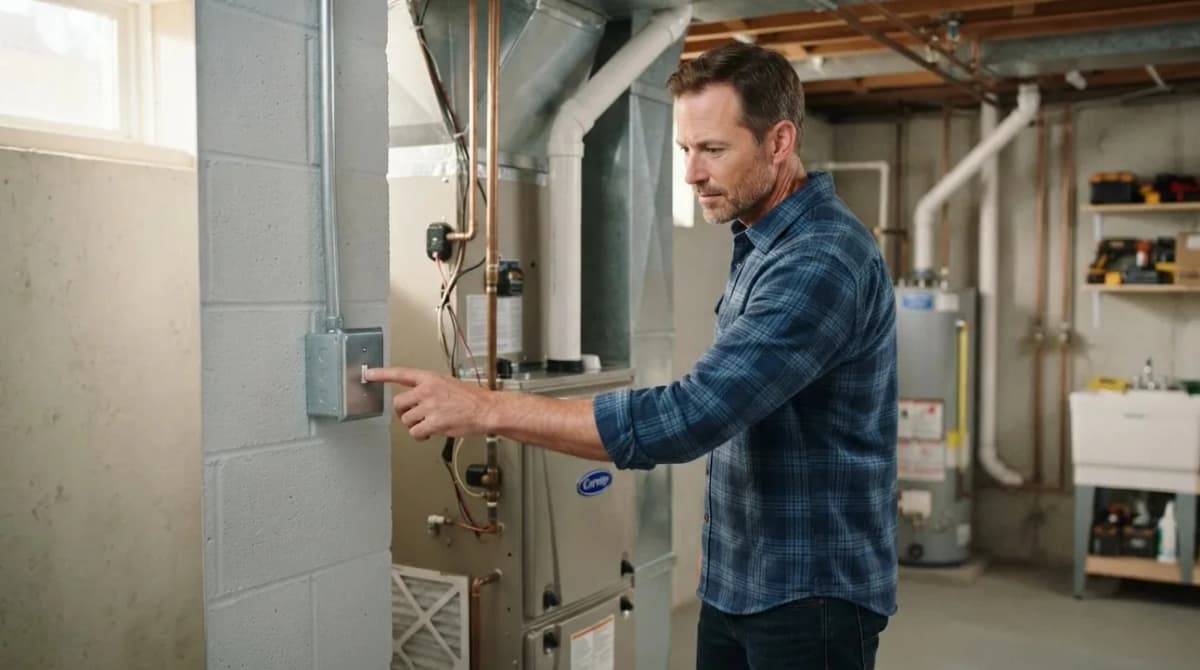
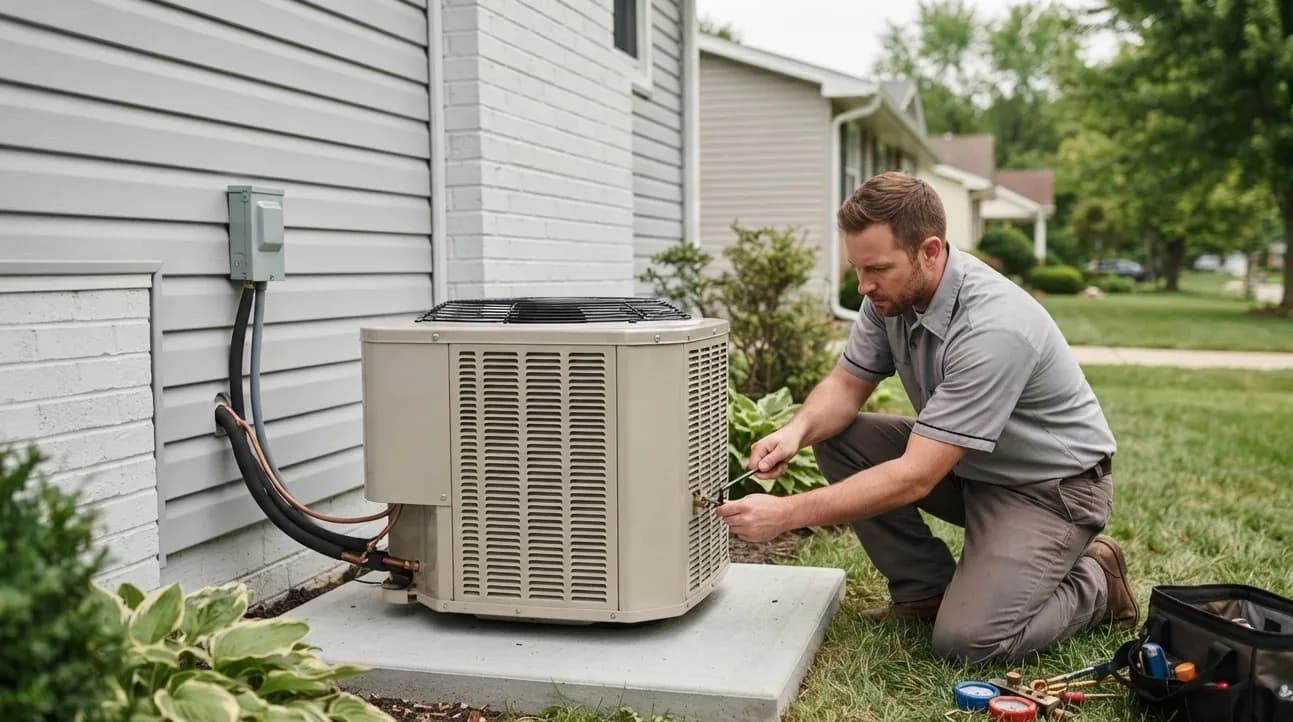
A new AC system typically costs $3,000 to $15,000+ installed, depending on the system type, home size, efficiency, ductwork, and installation requirements. Window and portable units can cost less than $1,000, while whole-home systems can cost significantly more.
The right air conditioning cost depends on what you need to cool and what your home already has. Compare the main AC options below before choosing a system.
AC Cost by System Type
Air conditioning costs vary significantly by system type. Below in the table are 2026 cost range estimates to help you understand where each option sits before comparing detailed prices.
| AC Type | Typical Cost | Best For | Full Guide |
|---|---|---|---|
| Central AC | $3,500–$15,000+ | Whole-home cooling, homes with ducts | [Central Air Conditioning Cost] |
| Ductless mini-split | $3,000–$10,000 (for a 1,000 sq.ft home) | Homes without ducts, room-by-room zones | [Mini-Split / Ductless Cost] |
| High-velocity AC | $10,000-$20,000+ | Older homes with limited duct space | [High-Velocity AC Cost] |
| Window AC | $200–$900 | Single rooms | [Window, Portable & Swamp Cooler Cost] |
| Portable AC | $300–$900 | Single rooms, flexible cooling | [Window, Portable & Swamp Cooler Cost] |
| Swamp cooler | $1,500–$3,500 | Dry climates | [Window, Portable & Swamp Cooler Cost] |
*These are directional budgeting ranges, not guaranteed quotes
Central AC and mini-split figures represent installed projects, while window and portable AC figures include equipment and setup. Actual costs vary based on the system, home, and installation requirements.
Central AC
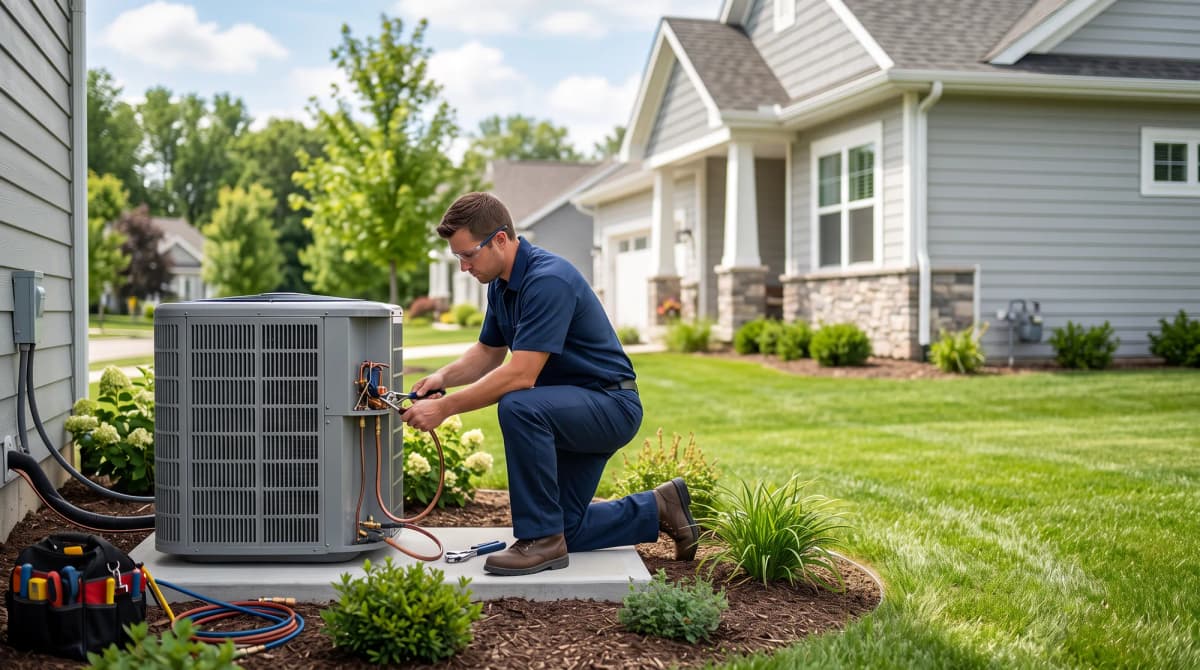
Central air conditioning cools the entire home through a network of ducts, making it a common option for whole-home cooling. Pricing varies based on system size, efficiency, and installation requirements.
If your home already has compatible ducts, central AC can be a practical whole-home solution. If new ductwork is required, the total project cost can increase significantly.
See our Central Air Conditioning Cost Guide [internal link] for a detailed breakdown.
Ductless Mini-Split
Ductless mini-splits are useful for homes without traditional ductwork or for homeowners who want independent temperature control in different rooms or zones.
Ductless mini-split installation costs depend on the equipment brand, home size, and system configuration. The number of rooms or zones you want to cool can also affect the total cost.
See our Mini-split/Ductless Cost Guide [internal link] for the full breakdown.
High-Velocity AC
High-velocity systems are designed for homes where conventional ductwork is difficult to install. They can be particularly useful in some older or historic homes with limited space for traditional ducts.
Instead of large conventional ducts, these systems use smaller, flexible ductwork that’s easier to route through existing walls, ceilings, and other tight spaces. This can make them worth considering when installing standard ductwork would require extensive home modification.
Because installation requirements vary significantly from one property to another, see our High-Velocity AC Cost Guide [internal link] for detailed pricing.
Window and Portable AC
Window and portable air conditioners are among the least expensive ways to cool an individual room. They are a good choice if you only need to cool one room or don't want to invest in a whole-home system.
Portable AC units offer greater flexibility because you can move them between rooms as needed, while window AC units remain permanently installed in the window where they are mounted.
See our Window, Portable, & Swamp Cooler Cost Guide [internal link] for a detailed price comparison.
Swamp Coolers
Swamp coolers, also called evaporative coolers, cool air by evaporating water rather than using conventional refrigeration.
They can be a practical option in dry climates, but their effectiveness depends heavily on local humidity and climate conditions. They also typically use less electricity than conventional refrigerated AC systems, making them worth considering where the climate is suitable.
See our Window, Portable, & Swamp Coolers Cost Guide [internal link] for more details.
What’s the Cheapest Way to Cool a Home?
The cheapest way to cool a home is not always to buy the cheapest AC unit. You can often reduce upfront and running costs by choosing equipment that matches the space you need to cool and avoiding unnecessary whole-home capacity.
Cool Only the Rooms You Use
If you do not need to cool the entire home, avoid paying for a whole-home system just to keep one or two rooms comfortable.
Window and portable AC units can provide targeted cooling at a much lower upfront cost than central AC. For occasional or limited-area cooling, this can be a more economical approach than installing a whole-home system.
See our Window, Portable, & Swamp Cooler Cost Guide [internal link] for detailed pricing.
Use Zoned Cooling Instead of Cooling the Entire Home
If you need to cool several rooms but do not use them all at the same time, consider a ductless mini-split with multiple zones.
You can direct cooling to the rooms you actually use instead of conditioning the entire home. This can also avoid the cost of installing traditional ductwork in a home that does not already have it.
Choose an Efficient AC for Frequent Use
The cheapest AC to operate isn't necessarily the cheapest unit to buy.
The cheapest AC to operate isn’t necessarily the one that’s cheapest to buy. If you use your AC frequently, compare different models alongside their upfront price. Paying more for efficient equipment may make sense if the system runs for many hours every day.
Avoid Oversizing the Equipment
Bigger is not always better, especially when it comes to air conditioning.
An oversized system can cost more upfront and may cycle on and off more frequently instead of running through longer cooling cycles. Proper sizing should account for factors such as the home’s insulation, windows, layout, climate, and such exposure. Have the system properly sized rather than choosing the largest capacity available.
Use Existing Ductwork
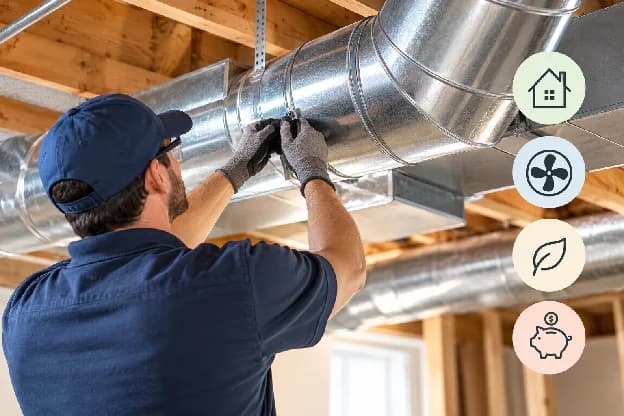
If your home already has suitable ductwork, reusing it can avoid the additional cost and disruption of installing an entirely new duct system.
Central AC can therefore be a practical option when the existing ductwork is compatible. If the ducts are damaged, undersized or unsuitable, compare the cost of modifying them with a ductless system before committing to central AC.
Consider an Evaporative Cooler in a Dry Climate
A swamp cooler, or evaporative cooler, can be a lower-cost cooling option in the right climate. It uses water evaporation rather than conventional refrigeration and typically costs around $1,500 to $4,000 with equipment and setup.
However, it works best in dry conditions. High humidity can significantly reduce its cooling effectiveness, so climate should be considered before choosing this equipment.
Don't Compare Equipment Prices Alone
A low equipment price does not necessarily mean a low overall air conditioning cost.
Compare the equipment price with installation, ductwork, electrical work and other modifications required to get the system operating. A more expensive unit that requires less installation work could cost less overall than a cheaper system that requires major modifications.
What Is The Cost to Add AC to a Home
The cost to add air conditioning depends on the type of system you choose, the size and layout of your home, the existing infrastructure and the amount of installation work required.
With Ductwork
If your home already has suitable, usable ductwork, adding central AC may require fewer modifications than a completely new HVAC installation. A central AC installation with existing ductwork typically costs around $3,500 to $10,000, depending on system size, efficiency and installation requirements.
However, you still need to assess existing ducts. Damaged, undersized or poorly configured ductwork can require repairs or modifications, increasing the project cost.
Your electrical system, equipment location and other installation requirements can also affect the final price.
If you already have ducts and want whole-home cooling, start by comparing the cost of adding central AC with the alternatives available for your property.
See our HVAC Cost Guides Hub [internal link] for more detail.
Without Ductwork
If your home has no existing ducts, you generally need to compare two approaches: installing new ductwork for a central AC system or choosing a ductless mini-split.
Adding new ductwork can bring the total project cost to around $8,000 to $15,000+, particularly when walls, ceilings or finished spaces need to be modified.
A ductless mini-split can provide cooling without traditional ductwork, with installed costs typically ranging from around $3,200 for a single-zone system to $14,500+ for a multi-zone system
The right option depends on your home's layout, the number of rooms you want to cool and whether you are already planning renovations.
What Affects Air Conditioning Cost?
Several factors can change the cost of air conditioning, even when two homeowners choose similar systems.
AC Type
The system itself is one of the biggest variables. A window unit, portable AC, ductless mini-split and central AC system all have different equipment and installation requirements.
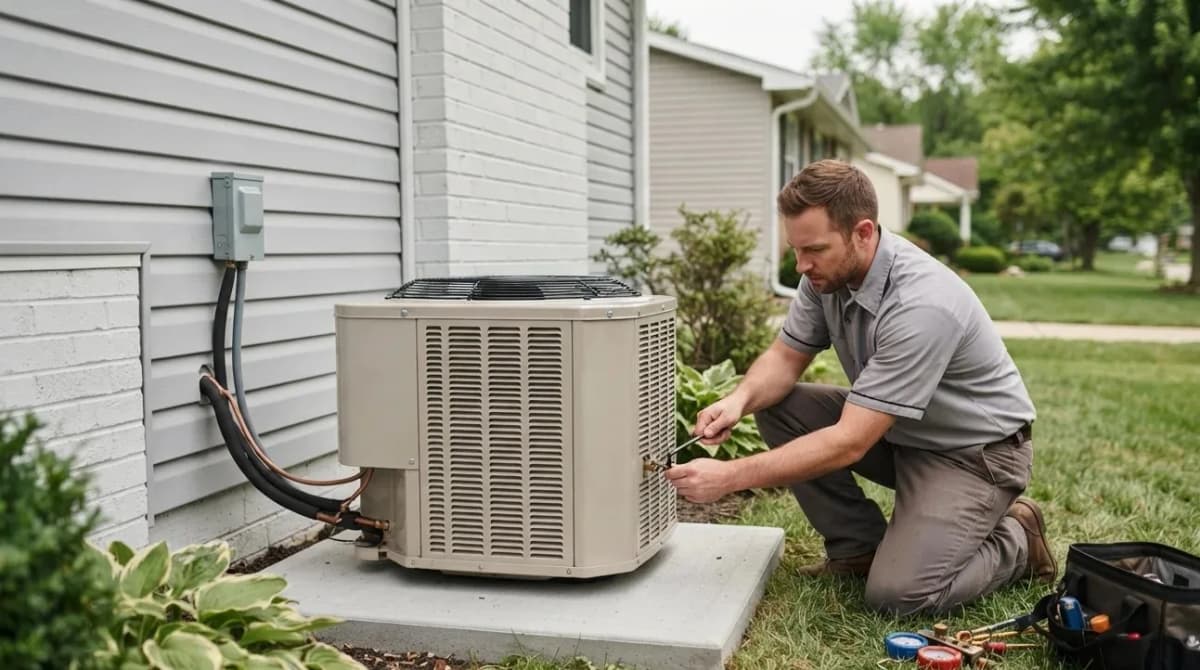
A single-room system may require very little installation, while a whole-home system can involve equipment, refrigerant lines, ductwork, electrical work and other components.
Home Size
Larger homes generally require greater cooling capacity, but square footage alone should not determine the size of an AC system.
Insulation, windows, layout, climate, sun exposure and other characteristics of the property can affect cooling requirements. Proper sizing is important because installing a system that is too large or too small can affect comfort and performance.
This is one reason a professional assessment can be more useful than choosing equipment based solely on home size.
Ductwork
Ductwork can significantly affect home air conditioning cost.
If your home already has suitable ducts, a central AC installation may require fewer modifications. Damaged, undersized or poorly configured ducts can add work to the project.
If there is no existing ductwork, compare the cost and disruption of installing it with the alternative of using a ductless system.
This is particularly important when estimating the cost of air conditioning for an older home, where adding conventional ductwork may involve opening walls, ceilings or other finished areas.
Efficiency
Higher-efficiency equipment can cost more upfront, although the exact premium varies by system and model. Higher SEER2 systems typically cost more upfront because they use more advanced technology, but they can reduce energy use and operating costs over time.
Rather than applying a fixed dollar range to efficiency, compare the upfront equipment cost with expected energy savings and how frequently the system will run.
If you plan to stay in the home for many years, long-term operating costs may matter more than the initial purchase price. If you need short-term or occasional cooling, upfront cost may matter more.
Installation Complexity
Two homes can require the same AC system but have very different installation costs.
Access to the installation area, electrical requirements, existing ductwork, refrigerant lines, drainage, controls and other site conditions can all affect the scope of work.
When comparing air conditioning cost estimates, make sure each quote covers the same equipment and installation scope. A lower quote may not be directly comparable if it excludes work included in another contractor's estimate.
Equipment vs. Installed Cost
Online equipment prices are not the same as the final cost of an installed AC system.
The equipment price covers the system itself, while an installation quote may also include labor, permits, electrical work, refrigerant-related work, duct modifications and other project requirements.
If you are specifically researching equipment-only pricing, see our [AC Unit Cost] guide.
FAQs
How Much Does Air Conditioning Cost in 2026?
A new AC system can cost roughly $3,000 to $15,000+ installed, depending on the type, size, efficiency and installation requirements. Smaller window and portable systems can cost less, while projects requiring new ductwork or significant modifications can cost considerably more.
What Is the Cheapest Type of Air Conditioning?
For single-room cooling, window and portable AC units generally have the lowest upfront cost. Current estimates put window AC at around $200 to $900 and portable AC at approximately $300 to $900, including equipment and setup.
For whole-home cooling, there is no single cheapest option because the total depends on ductwork, home layout, system size and installation requirements.
Is Central AC Cheaper Than a Mini-Split?
No single comparison applies to every home.
Central AC can be practical when suitable ductwork already exists, while a mini-split can avoid the cost and disruption of installing traditional ducts.
If you already have ducts, central AC may be worth comparing. If you have no ducts and want room-by-room control, a ductless system may be a more relevant option to investigate.
See our [Central Air Conditioning Cost] and [Mini-Split / Ductless Cost] guides for detailed pricing.
How Much Does It Cost to Add AC to a House With No Ducts?
The cost depends on whether you install new ductwork or choose a ductless system.
Adding ducts increases installation work and overall project cost, especially if you need to open finished walls or ceilings. A ductless mini-split can provide cooling without traditional ductwork.
See our [AC Installation Cost] guide for installation-specific costs.
Are Window AC Units Cheaper Than Portable AC Units?
Both are relatively inexpensive compared with whole-home systems. Current estimates put window AC at around $200 to $900, while portable AC costs approximately $300 to $900, including equipment and setup.
The right choice depends on the room, available installation space and whether you need to move the unit between rooms.
What Is the Best AC for an Older Home?
There is no single solution for every older home.
A high-velocity system may be worth considering where conventional ductwork is difficult to install, while a ductless mini-split can provide cooling without traditional ducts.
The home's existing infrastructure, renovation plans, layout and the rooms you need to cool should guide the comparison. See our [High-Velocity AC Cost] guide for more information.
Related HVAC Cost Guides
Once you know which type of air conditioning fits your home, use the relevant guide for a more detailed cost breakdown:
- [Central Air Conditioning Cost]
- [Mini-Split / Ductless Cost]
- [High-Velocity AC Cost]
- [Window, Portable & Swamp Cooler Cost]
- [AC Unit Cost]
- [AC Installation Cost]
- [HVAC Cost Guides Hub]
Sources:
https://homeguide.com/costs/carrier-air-conditioner-prices
https://www.leokobco.com/post/how-much-does-central-ac-cost-explained
https://www.acdirect.com/blog/cost-of-a-mini-split-system-for-a-1000-sq-ft-home-what-to-expect/
https://aquariushomeservices.com/blog/high-velocity-air-conditioning-cost/
https://homeguide.com/costs/window-ac-unit-cost
https://www.fixr.com/costs/evaporative-cooling-installation
https://www.mysmartclimatesolutions.com/blog/central-air-install-cost-with-existing-ductwork