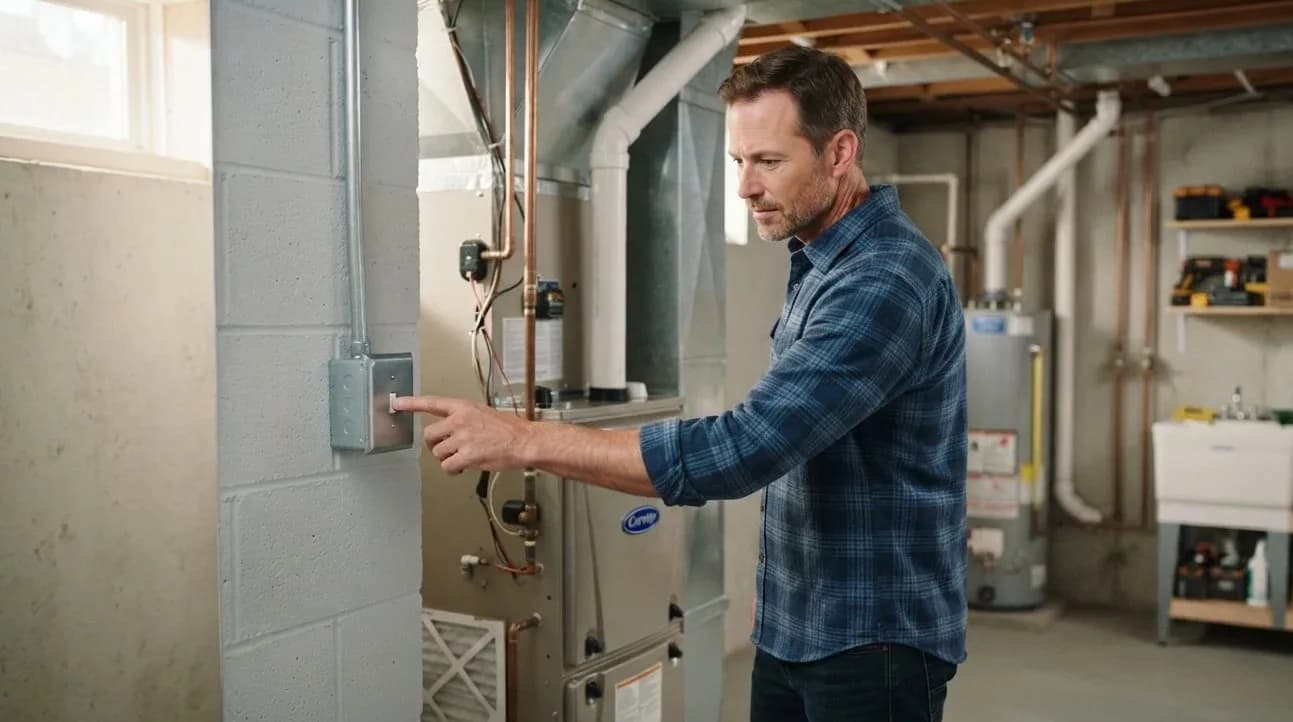
If your furnace or air conditioner suddenly stops working, a reset can get it working again. But how to reset HVAC system equipment safely depends on what has stopped working and what your equipment manual allows.
A reset will remove a temporary power interruption or one-time safety trip. It will not fix an issue with a failed component, wire issues, airflow restrictions, or repeated safety shutdowns. If the system shuts down again after a reset, that's a sign of an underlying problem — not something the reset itself caused.
Before You Reset Anything
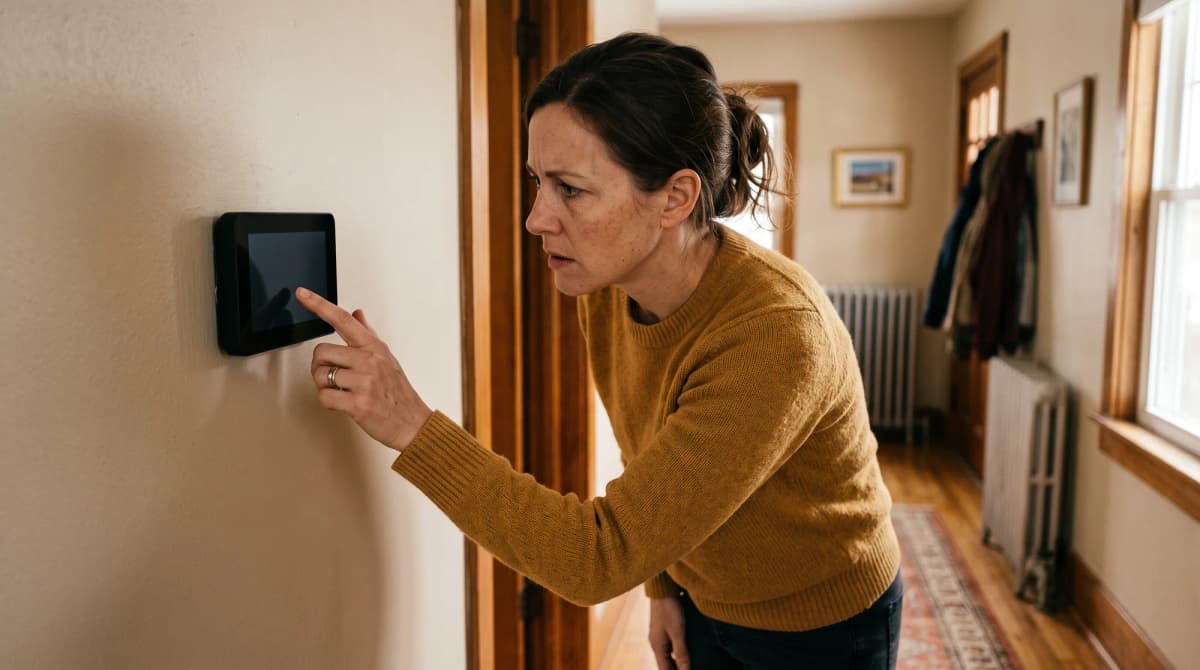
Begin with the thermostat. Ensure that the display is operating and the mode is correct. If the display is blank, the problem is likely not with the HVAC system, but with the thermostat or its power supply.
Next, check your electrical panel for a tripped breaker. The breaker might trip the first time because of a temporary electrical problem, but if it trips the same time again, it should not be reset again.
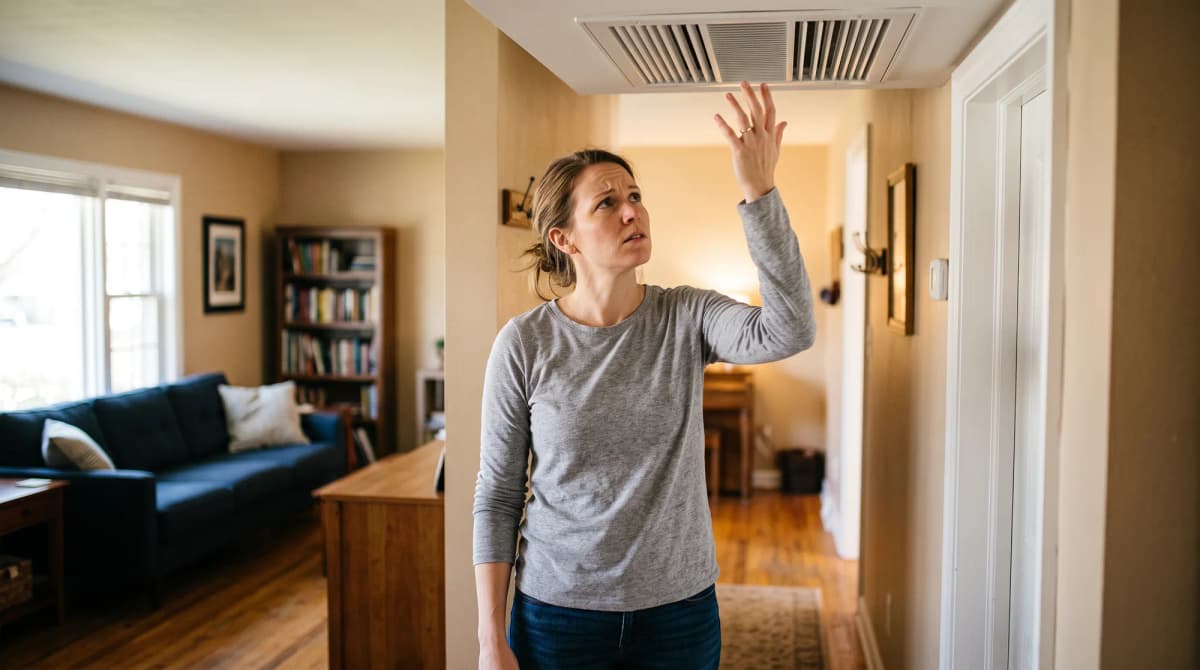
Determine the actual cause of failure. A working thermostat with an AC that will not start requires a different troubleshooting path from a completely unresponsive system.
If you smell gas, leave the house immediately and call your gas utility or 911 from outside. Treat it as an emergency, not a routine repair. For burning odors or unusual equipment sounds, stop troubleshooting and contact a qualified HVAC professional.
Fuel-burning furnaces also need to be vented properly, so that combustion gases (like carbon monoxide) do not get inside the house. The EPA explains the risks of carbon monoxide in indoor air.
How to Reset an Air Conditioner
If no safety issues are apparent and the AC is not responding, you can perform a simple power reset. Follow your equipment's owner's manual or installation manual if its instructions differ.
Step 1: Turn the Thermostat Off
Set the thermostat to "Off." This prevents the system from calling for cooling while you cycle the power.
For a simple reset, there is no need to open the wiring compartment of the thermostat or remove it.
Step 2: Turn Off Power at the Breaker
Find the breaker supplying power to your air conditioner or HVAC system and switch it to "Off."
Never take off electrical panel covers or work on energized components. If the breaker appears damaged or trips once more, immediately stop the operation without resetting the breaker.
Step 3: Locate and Cycle the Outdoor Disconnect
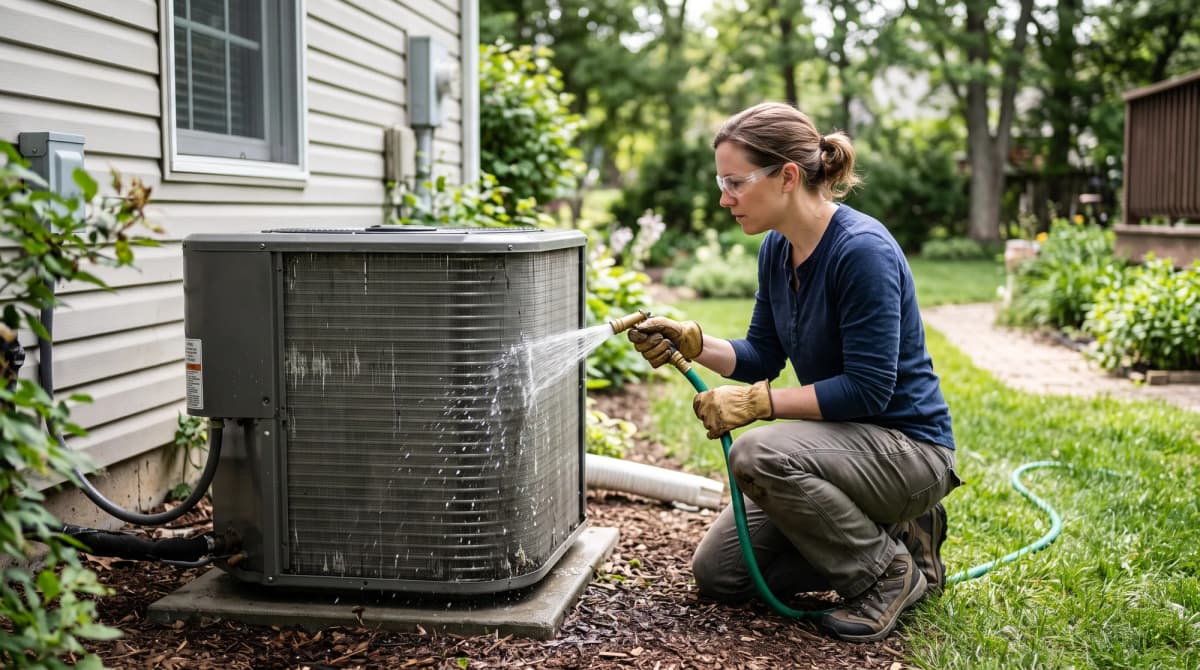
A central AC unit will have an outdoor disconnect box close to the condenser. It provides a way to shut off power to the outdoor equipment.
If your system is designed to be disconnected by the user, disconnect according to the manufacturer's instructions. Never remove the cover or mess with the internal wiring.
If you are unsure which disconnect controls your system, leave it as it is and contact a technician.
Step 4: Wait Before Restoring Power
Turn the system off and leave it off for the time recommended by the manufacturer. If the manual is not available, do not assume that one waiting time is the same for all systems.
The goal is simply to allow the equipment to remain powered down before electricity is restored.
Step 5: Restore Power and Turn the System Back On
Restore power according to the manufacturer's instructions. Then, switch the thermostat to “Cool” and reduce the setting below the room temperature.
Give the system time to respond. The compressor might be slow to start, so do not repeat the reset after a few seconds.
If the AC restarts normally, the shutdown may have been due to a temporary problem. If it resets once again, go to diagnosis instead of resetting again.
How to Reset a Furnace
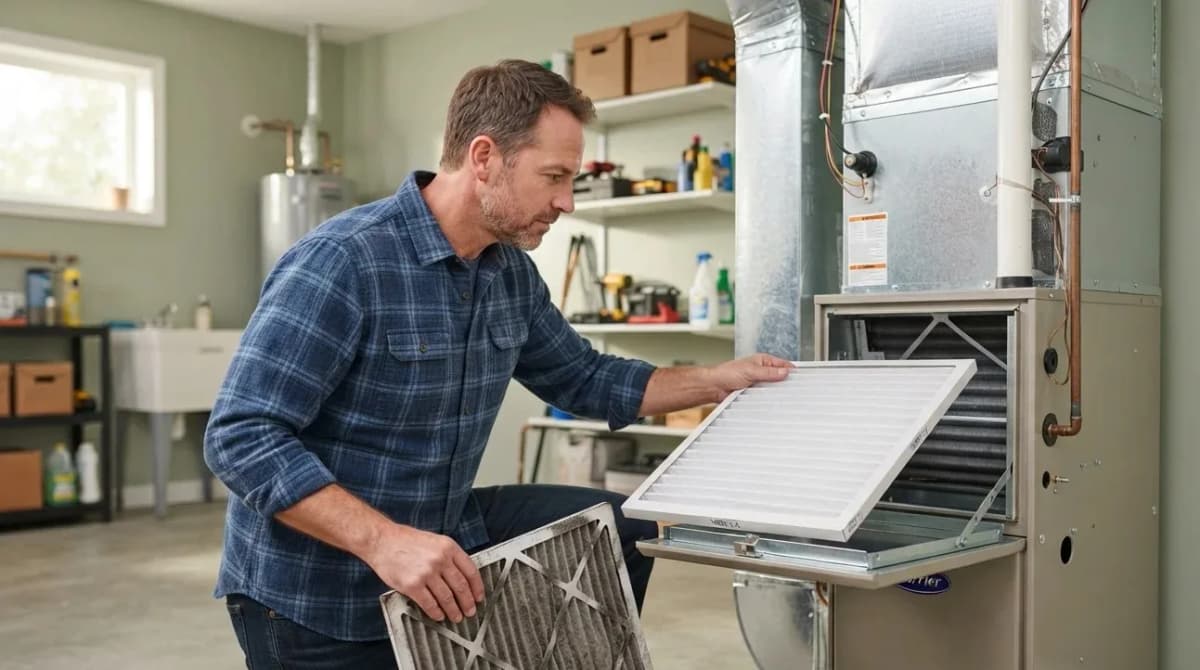
Furnace designs vary, so be sure to read the owner's manual before attempting to reset your furnace. Some models have a manual reset or safety switch; others rely primarily on the power switch and breaker.
Locate the Furnace Reset Button
If your furnace has a manual reset button, its location depends on the model. It can be close to the burner or blower assembly, or some safety switches are located in the cabinet.
Do not remove panels or reach around electrical connections, burners, or moving parts to find a button. If the manual doesn’t show a reset button you can use, don’t guess.
Press and Release the Reset Button Once
If the manufacturer's instructions show a reset button for the homeowner, press the button once and release it — don't hold it down or press it repeatedly.
If a safety control — often a limit switch, which shuts the furnace down when it detects overheating — trips again, it can mean a fault with the airflow, overheating, venting issues, or other issues that need to be diagnosed.
Check the Furnace's Power Switch and Breaker
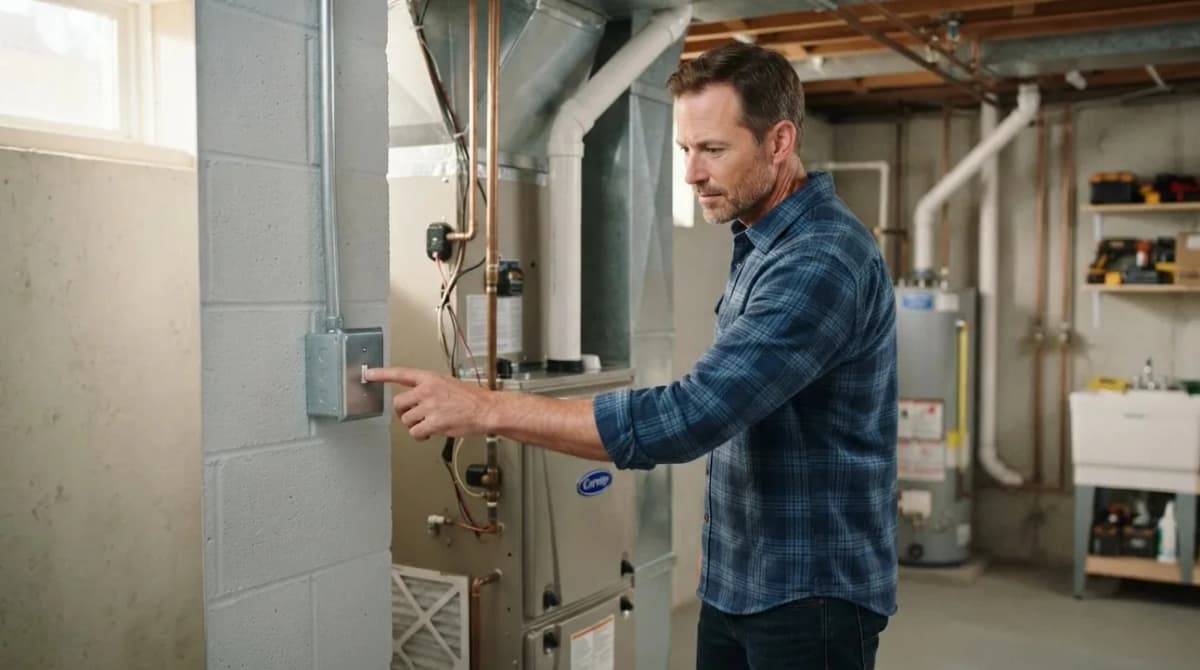
On many furnaces, there will be a power switch mounted on the wall close to the furnace, which is similar to a standard light switch. If the manual says this switch powers the furnace, make sure it is set to on.
You can also check the breaker if the equipment instructions permit it. If the breaker or safety control trips again, stop and arrange for professional service.
What a Reset Can and Can't Fix
A reset is to clear the temporary power disturbance or one-time safety trip so that the equipment controls can resume operation.
It is not designed to fix a bad motor, broken wiring, a bad control board, a refrigerant issue, a clogged vent, restricted airflow, or any other mechanical or electrical issue.
A reset is not a repair; it is a restart. If the problem recurs, it is a clue that the cause is different.
When Not to Keep Resetting the System
Don't keep resetting an HVAC system that turns off quickly or frequently. Recurring is when a condition is causing the equipment to shut down.
Restricted airflow, overheating, or venting issues will be linked to repeated safety trips on a furnace. Venting and combustion problems should not be ignored, as CO can form through fuel-burning devices.
If you smell gas, leave the house immediately and call your gas utility or 911 from outside. Treat it as an emergency, not a routine repair. If a carbon monoxide alarm sounds or you suspect CO exposure, move to fresh air immediately and call 911 from outside.
When to Call a Professional
If you smell gas, leave the house immediately and call your gas utility or 911 from outside. Do not re-enter until emergency responders say it is safe. Do not treat a gas leak as a routine HVAC repair.
Call an HVAC professional if the system will not stay running after a reset, a breaker trips again immediately, or a furnace safety control repeatedly shuts the equipment down.
Call a professional if you see damaged wires, need to open the equipment, or cannot find the right switch or disconnect.
If you need repair help, you can find residential HVAC repair companies through Best HVAC Companies. Use the site's residential repair page to find local contractors and repair services.
FAQs
Where is the reset button usually located on a furnace?
It depends on the furnace model. If there is a reset button accessible to the homeowner, the manufacturer's manual should state so and when it can be reset. There are also some safety switches located inside the box which are not meant for the homeowner to operate regularly. Never remove panels or bypass a safety control to find a reset button.
Why does resetting an HVAC system sometimes fix the problem?
A reset will clear the temporary power outage or one-time safety trip and restore the controls of the equipment to normal. That does not indicate that the root cause is fixed. If the same shutdown happens again, the recurring fault needs to be diagnosed rather than cleared with another reset.
Is it safe to keep resetting a system that keeps shutting off on its own?
No. Several shutdowns may signal an electrical, airflow, mechanical, or safety issue. Repeatedly resetting the system does not solve the problem. If your furnace keeps tripping a safety control, have it checked by a professional. Combustion or venting problems can be dangerous.
When should I stop trying to reset the system and call a professional instead?
Stop resetting the system if it trips again or keeps shutting down. If you smell gas, leave the house immediately and call your gas utility or 911 from outside. If you smell burning or notice an electrical problem you cannot safely identify, stop troubleshooting and contact a qualified professional. If you suspect carbon monoxide exposure, evacuate immediately and call 911 or your local emergency number from outside.