Featured Image: https://drive.google.com/file/d/1iP6bmCEbivvib05Eorozryeqa3OwLzTC/view?usp=drive_link
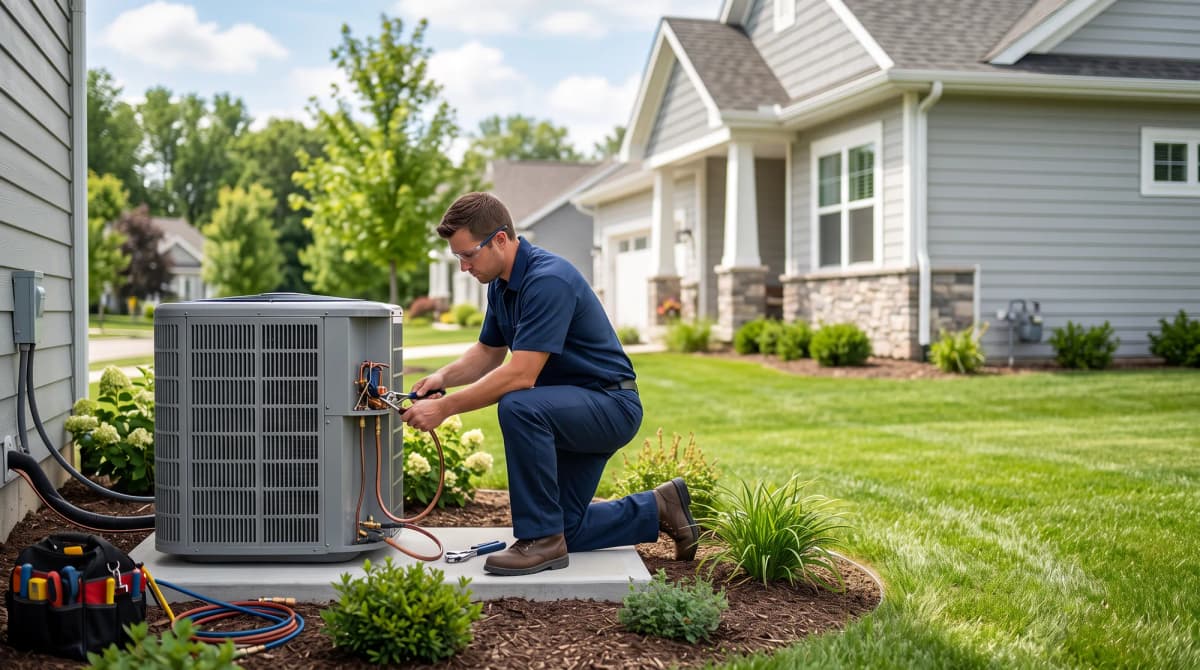
HVAC installation typically costs $7,000 to $16,000, with more complex projects costing more. The cost to install an HVAC system depends on home size, existing ductwork, system type, accessibility, electrical work, and local labor. Installing HVAC in a new build or home without ducts generally costs more than a simple installation using existing infrastructure.
HVAC Installation Cost by Scenario
The cost to install HVAC system equipment and supporting infrastructure varies depending on what your home already has. An installation with usable ductwork requires less work than adding HVAC to a home that needs an entirely new distribution system.
| Installation Scenario | What's Involved | Typical Installed Cost |
|---|---|---|
| New HVAC Installation | HVAC equipment, ductwork, connections, controls, permits, and installation planned as part of the build | $7,000–$16,000+ |
| Retrofit with existing ducts | New HVAC equipment connected to an existing duct system, with required electrical, drainage, controls, and commissioning work | $5,000–$12,500 |
| Adding HVAC to a home with no ducts | HVAC equipment plus new ductwork, distribution pathways, electrical connections, and installation | $8,500–$19,200+ |
| Addition or extra zone | Duct extension where existing capacity allows, or a separate zone or ductless system | About $2,500–$5,000 per ductless zone |
Sources: HomeGuide, HomeAdvisor, and HomeServicesCo. Published national cost ranges are provided for budgeting and can vary by equipment, home layout, ductwork requirements, access, electrical work, permits, and local labor.
New ductwork can be one of the highest additional costs when installing HVAC in a home without existing ducts. Our Ductwork Installation and Replacement Cost Guide [link] provides a more detailed breakdown of ductwork pricing and installation requirements.
Adding HVAC to a Home Addition
An addition may be able to use the home's existing HVAC system if the equipment has enough capacity and the ductwork can be extended effectively. In other cases, the project may require a separate zone, air handler, or ductless system.
The installation cost depends on the size and layout of the addition, how far it is from the existing ductwork, and whether new electrical or control connections are needed. A ductless system can also make sense when extending the existing duct network would require extensive construction.
HVAC Installation Cost Per Square Foot
The cost of HVAC installation can be roughly estimated at $3 to $6 per square foot for an HVAC system, including equipment and installation. This is a preliminary budgeting benchmark, not a fixed installation rate.
| Home size | Cost per sq. ft. | Typical total |
|---|---|---|
| 1,000 sq. ft. | $3–$6 | $3,000–$6,000 |
| 1,500 sq. ft. | $3–$6 | $4,500–$9,000 |
| 2,000 sq. ft. | $3–$6 | $6,000–$12,000 |
| 2,500+ sq. ft. | $3–$6+ | $7,500–$15,000+ |
Source: HomeGuide for the $3-$6 per-square-foot national benchmark. The total ranges above are calculated from that benchmark for preliminary budgeting and are not fixed installation prices.
Contractors do not determine HVAC installation pricing simply by multiplying the home’s size by a fixed rate. System capacity and installation requirements depend on the home’s heating and cooling load, ductwork, access, equipment configuration, and other project-specific factors.
A 2,000-square-foot home with usable ductwork can therefore have a very different installation cost from a 2,000-square-foot home that needs a new duct system.
What's Included in the Installation
The HVAC equipment is only one part of an installation quote. Depending on the project, your contractor may charge for labor, equipment setup, ductwork, electrical connections, permits, disposal, controls, and other installation work.
| Line item | Share of total | Notes |
|---|---|---|
| Labor & installation | Often 40%–50% | Covers equipment placement, connections, installation work, testing, and commissioning. |
| Equipment set | Often 40%–60% | Covers the HVAC equipment being installed. The proportion varies by system and equipment selected. |
| New ductwork, if needed | Varies | Can become a major additional cost when the home has no usable supply and return ductwork. |
| Electrical/circuit work | Varies | May include a new circuit, disconnect, wiring changes, or panel modifications. |
| Permits & disposal | Varies | Permit, inspection, removal, and disposal costs depend on the project and location. |
Source: ConsumerAffairs for published equipment and labor share estimates. Individual projects may allocate costs differently, so these percentages should not be treated as fixed components of every installation.
The percentages above are not fixed components that should be added together. Equipment and labor can each represent a substantial portion of an HVAC project, while ductwork, electrical work, permits, and disposal vary according to the installation.
Other potential line items include thermostats and controls, refrigerant connections, drainage, equipment removal, and repairs to walls or ceilings when access is required.
How Much Does HVAC Installation Labor Cost?
HVAC installation labor costs can range from approximately $500 to $2,500, according to HomeAdvisor. HomeGuide places HVAC installation labor at approximately $1,000 to $3,000. The difference reflects the fact that labor varies substantially with system type, home size, accessibility, ductwork, and installation complexity.
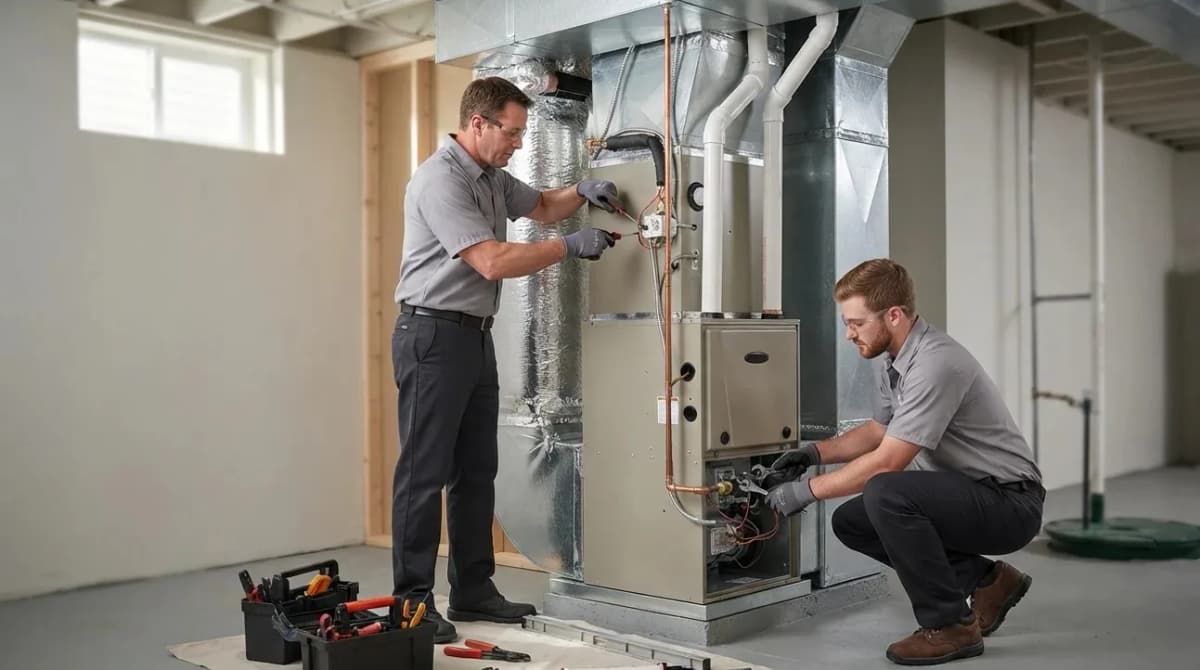
Installation labor can include equipment placement, connecting components, refrigerant and drainage connections, electrical coordination, testing, commissioning, and cleanup. New ductwork, difficult access, multiple zones, and electrical modifications can increase the amount of labor required. Contractors may quote installation labor as a part of a flat project price rather than charging homeowners strictly by the hour.
HomeGuide estimates that an HVAC installation using existing ductwork can take about 1 to 2 days, while installations that include new ductwork can take about 3 to 5 days.
For a detailed breakdown of hourly rates and HVAC labor pricing, check our HVAC Labor Rates Cost Guide [link].
For equipment being installed, check our following cost guides:
- AC Unit Cost Guide [Link]
- Furnace Cost Guide [Link]
- Heat Pump Cost Guide [Link]
- Mini-Split/Ductless Cost Guide [Link]
What Affects Installation Cost
Whether Ductwork Already Exists
Existing, usable ductwork can significantly bring down HVAC installation costs because the contractor may be able to connect the new equipment to the existing distribution. But if the home has no ductwork, a new supply and return network may need to be designed and installed.
HomeAdvisor reports ductwork installation costs of approximately $453 to $2,189, with an average of $1,252. Larger installations can cost more depending on the amount of ductwork required and how difficult it is to access the installation areas.
New ducts may need to run through attics, crawlspaces, basements, walls, ceilings, or closets. Routing them through finished areas can increase labor and may require additional finish repairs.
See our Ductwork Installation & Replacement Cost Guide [link] for more detailed ductwork pricing.
Home Age and Access
Older homes can present installation challenges because they were not always designed around modern HVAC equipment or ductwork.
Limited access to attics, crawlspaces, walls, ceilings, or mechanical spaces can make installation more difficult. Finished walls and ceilings may also need to be opened and repaired to route ducts, wiring, refrigerant lines, drainage, or other components.
Basement installations can have similar challenges. If usable ductwork can be extended and the existing system has enough capacity, the project may resemble a simpler retrofit. If the basement has no suitable distribution system, the installation may require new ductwork, a separate zone, or a ductless system. Access through narrow stairways, doors, or mechanical spaces can also increase labor time.
System Type
System type affects installation because different HVAC systems require different equipment, connections, distribution methods, and labor.
For example, a ducted system requires suitable supply and return pathways, while a ductless system can avoid extensive conventional ductwork. The equipment itself is another installation line item, but detailed equipment pricing belongs in the dedicated system-specific guides.
Region and Labor
The HVAC system installation cost can vary significantly by location. Labor rates, contractor demand, operating costs, permit requirements, and local building codes differ between markets. This means two similar installations can cost different amounts in different markets, even when the equipment and home size are comparable.
Electrical Upgrades
An HVAC installation may require additional electrical work if the home’s existing service cannot support the new equipment. This can include a dedicated circuit, disconnect, or electrical panel modifications. Ask the contractor to identify any required electrical work during the site assessment and include it in the installation quote.
Installing HVAC in an Older Home With No Ductwork
The cost to install HVAC in old house properties can be higher because the contractor may need to create the infrastructure required to distribute conditioned air.
HomeAdvisor estimates that adding HVAC to a house with no ducts can cost approximately $8,500 to $19,200, including ductwork.
The installation may involve:
- Designing and installing new supply and return ducts
- Creating pathways through walls, ceilings, floors, attics, or crawlspaces
- Insulating and sealing ductwork
- Adding electrical connections
- Creating access to concealed areas
- Repairing walls or ceilings after installation
- Obtaining permits and completing inspections
The amount of construction required is often a major factor in the final quote. For a detailed price breakdown of ductwork installation, check our Ductwork Installation & Replacement Cost Guide [link].
Ducted HVAC vs. Ductless HVAC
When a home has no ductwork, you do not necessarily have to install a conventional duct network. A ductless mini-split can provide heating and cooling to individual rooms or zones without requiring extensive new ducts.
| Option | Best Suited For | Installation Considerations |
|---|---|---|
| Conventional ducted HVAC | Whole-home heating and cooling where ductwork can be installed | Requires supply and return duct pathways and more construction in finished homes |
| Ductless mini-split | Homes, additions, or individual areas without usable ductwork | Avoids extensive conventional ductwork but requires indoor units, outdoor equipment, and suitable electrical connections |
| High-velocity HVAC | Older or architecturally sensitive homes where conventional ducts are difficult to route | Uses smaller air-distribution tubing and can reduce the need for large conventional ducts |
HomeAdvisor reports ductless mini-split installation costs ranging from about $2,000 to $14,500, depending on system size and the number of air handlers.
Ductless can therefore be worth considering when adding ducts would require significant construction or disruption. High-velocity systems are another option for retrofit projects where conventional ductwork is difficult to accommodate.
See our Mini-Split/Ductless Cost Guide [link] for specific pricing.
Proper HVAC Sizing Matters
Home size alone should not determine the size of the HVAC system being installed. A contractor should evaluate the home’s heating and cooling load based on factors such as insulation, windows, orientation, construction, and local climate.
A Manual J load calculation can be used to determine the required heating and cooling capacity. For ducted systems, proper duct design is also important because the distribution system needs to deliver the required airflow throughout the home.
Ask the contractor how the system was sized and whether the installation includes an appropriate load calculation rather than relying only on a rule-of-thumb square-foot estimate.
New Construction HVAC Installation
New construction installation costs about $7,000 to $16,000 for an HVAC system with ductwork, according to HomeGuide.
Because the HVAC system can be planned before walls and ceilings are finished, contractors can coordinate duct routing, electrical requirements, drainage, equipment locations, and controls during the build. This can reduce the access and finish-repair work that often increases the cost of retrofit installations.
Planning should account for:
- Heating and cooling load calculations
- Insulation levels
- Window size and orientation
- Equipment location
- Duct design and routing
- Electrical requirements
- Drainage
- Thermostat and control locations
- Access for future maintenance
Installing vs. Replacing: Which Applies to You?
Whether you should install or replace an HVAC system depends on what your home already has. If there is no complete setup, you may need a new installation with equipment, ductwork, electrical connections, and other infrastructure. HVAC replacement means removing an existing system and installing new equipment, often while keeping usable ductwork and other existing infrastructure.
If your home already has a complete HVAC system that is aging, failing, or no longer meeting your comfort needs, you are likely looking at a replacement rather than a new installation. If you are adding heating and cooling to a home, addition, or area that does not have a complete system, installation costs are a more relevant starting point.
For current pricing on replacing an existing system, see our HVAC Replacement & New System Cost Guide [link].
How to Get Accurate Installation Quotes
A complete HVAC installation quote shows what the contractor is offering and what will be the additional costs of items and services the contractor will outsource. When comparing quotes, make sure each has the following charges mentioned:
- Equipment and installation labor
- New or modified ductwork
- Electrical work
- Thermostat and controls
- Permits and inspections
- Refrigerant connections
- Drainage
- Equipment removal and disposal
- Finish repairs, such as ceilings and walls
- Testing and commissioning
- Warranty coverage
Get at least three quotes and make sure each contractor is pricing the same scope of work. Ask whether the system has been properly sized through an appropriate load calculation and whether the quoted price includes all required installation work.
A lower price is not necessarily the better deal if it excludes ductwork, electrical work, permits, disposal, or other required installation items.
Ready to install HVAC in your home? Get accurate installation quotes based on your home’s layout, existing infrastructure, system requirements, and local labor costs.
Frequently Asked Questions
How much does it cost to install an HVAC system?
The average cost of HVAC installation is approximately $7,000 to $16,000 for a residential project. Homes requiring new ductwork, electrical upgrades, multiple zones, or extensive retrofit work can cost more.
How much does it cost to install HVAC in an old house?
The cost to install HVAC in old house properties with no existing ductwork can be approximately $8,500 to $19,200, including ductwork. Limited access, finished walls, electrical modifications, and more complex layouts can increase the final cost.
What is the HVAC installation cost per square foot?
A general budgeting benchmark is $3 to $6 per square foot for an HVAC system, including equipment and installation. It should only be used for preliminary budgeting because actual installation costs depend on the home’s heating and cooling load, ductwork, access, equipment, and other project requirements.
How much does it cost to install HVAC in a basement?
The cost to install HVAC in basement areas varies according to whether existing ductwork can be extended, whether the current system has sufficient capacity, and how easily the contractor can access the space. A separate zone or ductless system may be considered when extending existing ductwork is impractical.
Is installing HVAC different from replacing HVAC?
Yes, installing HVAC generally involves adding a system and the infrastructure needed to distribute conditioned air where a complete system does not already exist. Replacing HVAC involves removing existing equipment and installing a new one, often while retaining existing infrastructure.
How long does HVAC installation take?
A simple installation can sometimes be completed in about a day. Projects involving new ductwork, difficult access, electrical modifications, or multiple zones can take several days, depending on the scope of work.
Related Cost Guides
Explore our [Internal link: HVAC Cost Guides] hub for more installation, replacement, equipment, ductwork, and labor pricing information.
- [Internal link: HVAC Replacement & New System Cost]
- [Internal link: Ductwork Installation & Replacement Cost]
- [Internal link: Mini-Split/Ductless Cost]
- [Internal link: AC Unit Cost]
- [Internal link: Furnace Cost]
- [Internal link: Heat Pump Cost]
- [Internal link: HVAC Labor Rates]
Sources:
https://homeguide.com/costs/hvac-cost
https://www.homeadvisor.com/cost/heating-and-cooling/
https://repaircostledger.com/hvac-replacement-cost/
https://www.homeservicesco.com/cost-guide/hvac-installation
https://www.homeadvisor.com/cost/heating-and-cooling/ductless-mini-split-ac/
https://www.homeadvisor.com/cost/heating-and-cooling/install-ducts-and-vents/
https://www.consumeraffairs.com/homeowners/hvac-installation-cost.html
https://www.trane.com/residential/en/resources/glossary/load-calculation/
https://golime.com/blogs/news/what-is-a-manual-j-calculation-and-why-does-it-matter-for-your-home