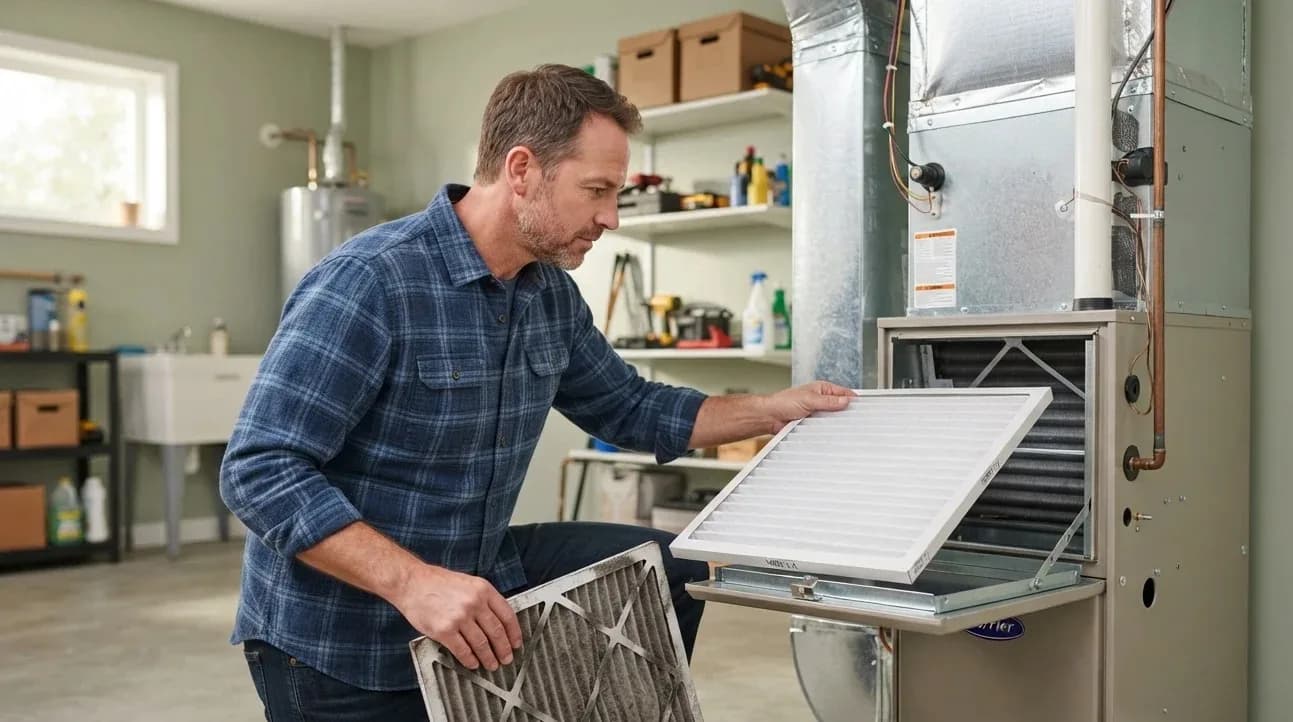
If you're wondering how often to change an HVAC air filter, there isn't one schedule that works for every home. A filter in a quiet home with no pets could last longer than one in a home with children, pets, allergies, or renovation dust.
There are a number of factors that impact filter life, such as type, thickness, MERV rating, and frequency of HVAC use. Instead of applying one universal number, base your filter's replacement schedule on the manufacturer's recommendations and the actual condition of the filter.
The General Rule of Thumb
A general rule of thumb is to replace standard 1"-2" disposable filters every 1 to 3 months. ENERGY STAR suggests that filters should be replaced at least once every three months or more often if they are used during periods of heavy heating or cooling.
That doesn't mean every filter needs to be replaced on the same day. A filter can become dirty much faster when your HVAC system runs frequently or when your home has pets, construction dust, or other airborne particles.
Start by checking the filter every month. After a few checks, you'll have a better idea of your home's actual air filter replacement schedule.
If your filter or HVAC manufacturer gives different instructions, follow those recommendations.
How Filter Type and MERV Rating Affect Lifespan
Filters are made of different materials, with varying thickness and filtration efficiency. A basic fiberglass filter will have less filter material, and pleated filters will have a larger surface area for trapping airborne particles.
A MERV rating can also be found on the filter. MERV is an acronym for Minimum Efficiency Reporting Value, which indicates the performance of the filter in capturing specific airborne particles. The higher the MERV rating, the more effective the air filter will be.
But with every HVAC system, higher filtration does not always mean higher performance. If the resistance to airflow is too high, the system will have to work harder. According to the U.S. Department of Energy, dirty or clogged filters can decrease airflow, make equipment run longer, cause motor wear, and cause energy costs to rise.
A thicker 4" or 5" media filter may offer longer service life than many thin media filters due to the increased amount of filtering material. However, the proper replacement period still depends on your particular filter, HVAC system, and household conditions.
Household Factors That Shorten the Interval
How often you need to change your HVAC air filter may be different from your neighbor's.
Pets
Hair and dander can increase the amount of particles in the air and shorten filter life. If you have multiple pets or pets that shed a lot, you might need to change your filters more often.
Regularly check the filter, rather than waiting for a scheduled date. Replace as per the manufacturer's instructions if it becomes visibly dirty earlier than expected.
Allergies or Respiratory Sensitivities in the Home
If a family member suffers from allergies or respiratory sensitivities, filtration might be a key indoor-air solution.
A suitable filter can capture airborne particles, but don't automatically choose the highest MERV rating available. Ensure that the filter fits your HVAC system and airflow requirements.
Household Size and Occupancy
The more people and pets in a household, the more activity and, consequently, the more particles that may move through the HVAC system.
For larger families or households, where everyone is spending more time at home, make sure to change your filter more frequently. Your previous air filter replacement schedule may no longer be appropriate.
Renovation or Construction Dust
Filters can get clogged up surprisingly easily if there is a home improvement project. Drywall sanding, cutting through drywall, removing flooring, and other activities can generate significantly more dust than normal household activities.
Check the filter regularly and change it when it gets dusty during renovation work.
Running the System Constantly During Peak Season
When air passes through your filter, the particles are captured. The filter may become dirty more quickly if your furnace or air conditioning unit operates for extended periods on hot or cold days.
This is why it is useful to check it monthly during heavy usage, as it is more effective than just a calendar reminder. During these times, ENERGY STAR suggests that filters should be checked every month.
Warning Signs Your Filter Is Overdue
A dirty filter doesn't always cause an obvious HVAC problem. Sometimes the clearest sign is simply a filter covered with dust when you remove it.
Other warning signs can include:
● Reduced airflow from supply vents. ● Dust collecting around the home faster than usual. ● The HVAC system running longer than normal. ● A visibly clogged or heavily discolored filter. ● Difficulty maintaining your thermostat setting.
A clogged filter restricts airflow and can make your HVAC system work harder. ENERGY STAR recommends regularly checking, cleaning, or replacing filters and notes that dirty filters can increase energy costs and contribute to equipment problems.
If replacing the filter doesn't improve airflow or comfort, don't assume the filter is the only issue. Your system may need further troubleshooting.
How to Check Your Filter Right Now
The majority of homeowners do not require special tools to check an HVAC filter.
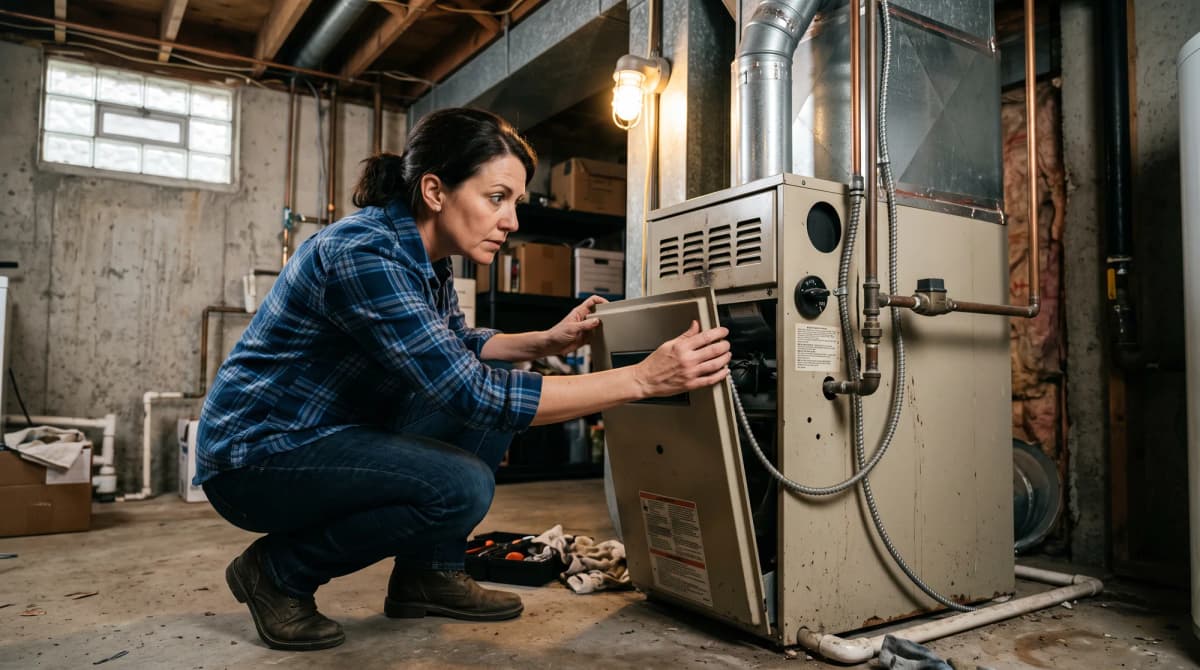
Look for the filter first. In some systems, it can be located in a return air grill, filter cabinet, or close to the furnace or air handler. When in doubt, take a look at the HVAC owner's manual.
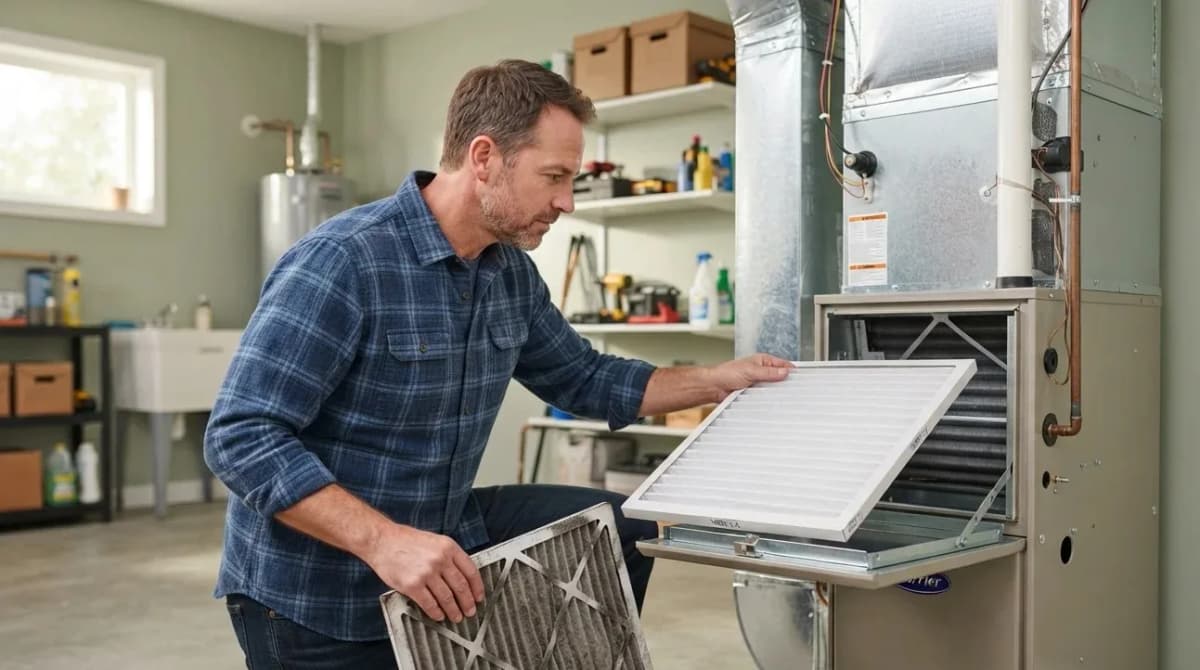
Carefully remove the filter and examine its surface. If it is dusty or filled with debris, it's time for replacement. You can alternatively place the filter next to a light source if possible. If you can't see light through it, it's time to replace it.
When choosing a replacement, use the size and MERV rating recommended for your particular HVAC system.
Look at the airflow arrow on the replacement filter. It should point in the direction the air travels through the system.
FAQs
Does a thicker, higher-MERV air filter last longer than a basic one?
Not necessarily. A thicker filter may have more surface area and can have a longer service interval, but filter life depends on its design, your HVAC system, and household conditions. While a higher MERV rating signifies higher filtration efficiency, it does not necessarily indicate a longer life. Follow the recommendations of the filter and HVAC manufacturer.
How can I tell if my air filter needs changing right now?
If you have pets, recently renovated, or have been operating the HVAC system heavily, check the filter for visible dust and debris. ENERGY STAR suggests changing the filter monthly for heavy usage. When the filter appears dirty, change it as per the manufacturer's instructions, not just because the calendar reads "change filter every 3 months".
Can a dirty air filter actually damage my HVAC system?
Yes. Filters that become clogged can limit airflow and cause the HVAC to operate at higher capacity. Dirty filters can lead to longer furnace runtimes, motor wear, and higher energy bills, according to the U.S. Department of Energy. Simple ways to help prevent unnecessary strain on the system are regular inspection and replacement.
Do pets really change how often I should replace my filter?
They can. Particles in the air from pet hair and dander can cause a filter to become dirty more quickly. Check the filter monthly if you have pets and replace it as needed. If you have more than one pet that sheds regularly, you might need to replace it more often.