You do not need to be an HVAC technician to keep your heating and cooling system in better shape. Many DIY HVAC maintenance tasks are easy and safe for homeowners. They do not take much time. They can also help you find small problems before they become expensive repairs.
The important thing is knowing what you can do yourself and when you need a professional. This is a homeowner-friendly checklist of the things you can do to maintain your unit, such as changing filters and removing debris around the outdoor unit. It also clarifies which jobs should always be done by a qualified HVAC technician.
Homeowner-Safe Maintenance Tasks
Replace or Clean Air Filters Regularly
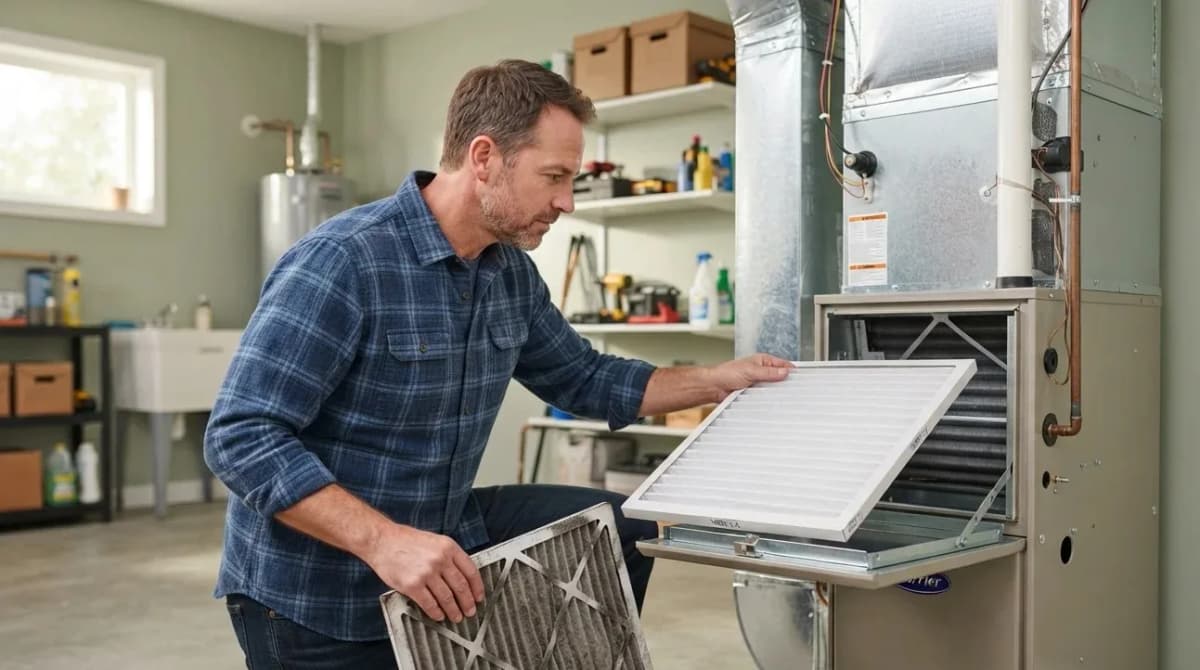
Dust and other airborne particles are trapped by your air filter before they travel through your HVAC system. A filter that becomes heavily loaded with debris can restrict airflow and make the system work harder.
Check your filter regularly and replace or clean it according to the filter manufacturer's instructions. The appropriate schedule depends on the type of filter and your household. If you want a more in-depth explanation, read How Often Should You Change Your HVAC Air Filter?
Keep the Outdoor Unit Clear of Debris and Vegetation
Your outdoor condenser needs good airflow to release heat from your home. Leaves, grass clippings, weeds, and other debris can accumulate around the unit and hinder that flow.
Walk around the condenser periodically and remove loose debris by hand. Trim any plants growing against the unit. Be careful not to damage the cabinet, refrigerant lines, or electrical parts. Maintain a relatively open area around the unit to allow for airflow.
Make sure not to store garden tools, boxes, or household items inside the outdoor unit. Keeping the area clean makes it easier to check the unit and helps airflow properly.
Clean the Condenser Coils Periodically
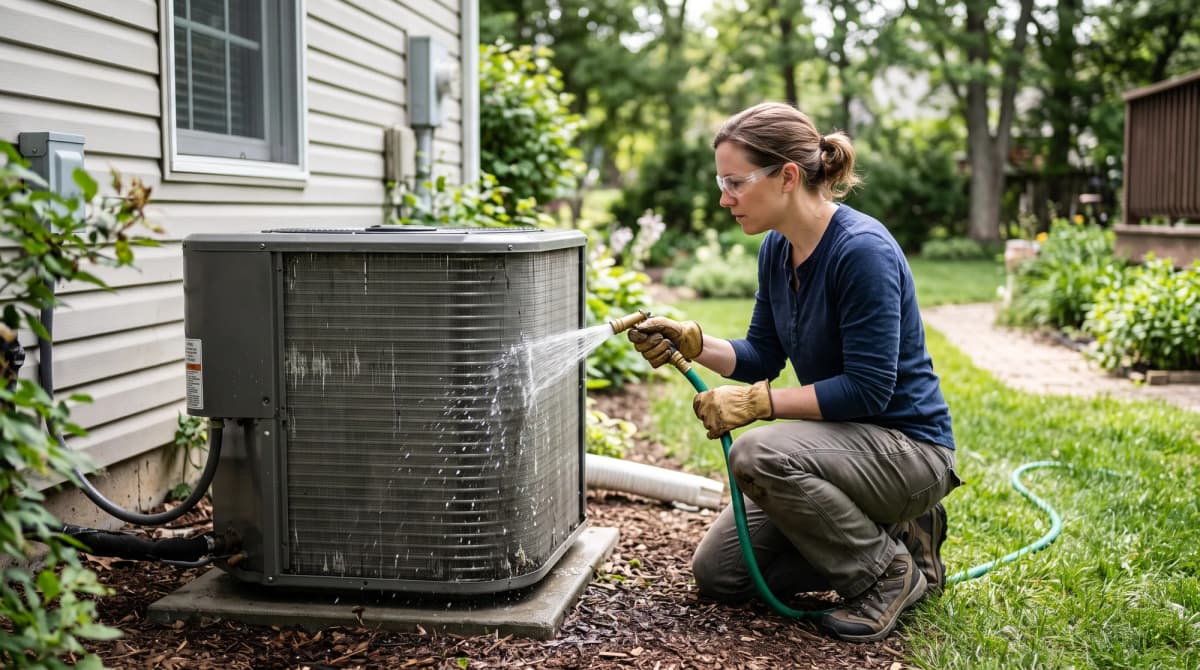
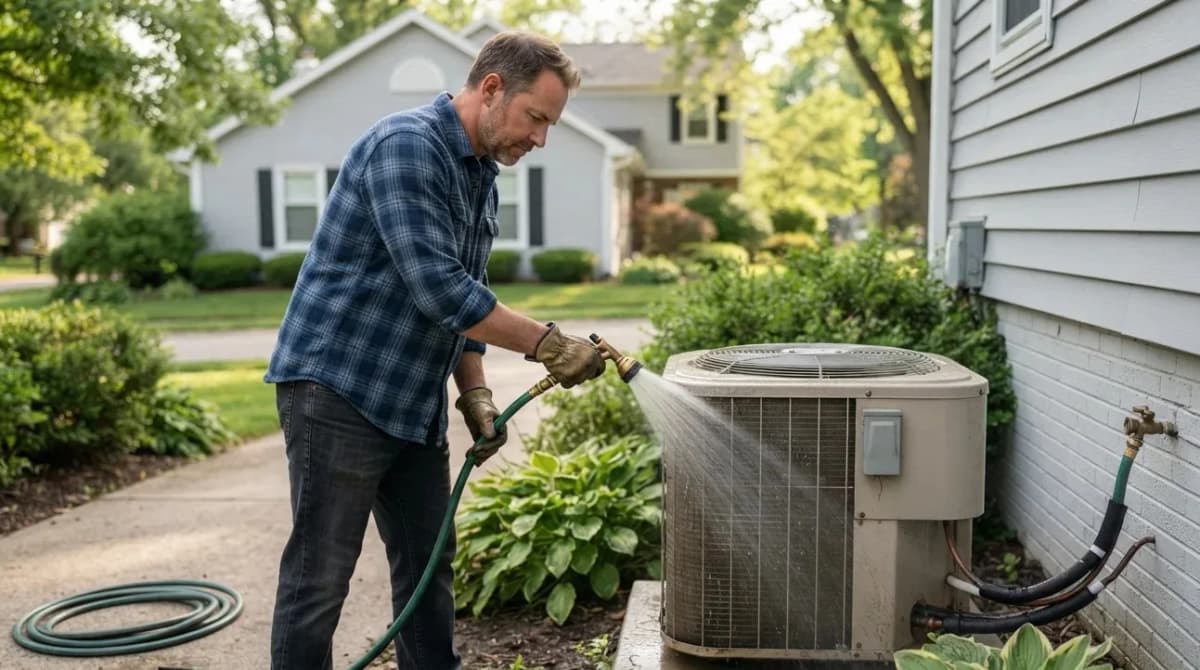
The condenser coils are the outdoor unit's heat-transfer surfaces. Dirt and debris on those surfaces can interfere with heat transfer and reduce cooling performance.
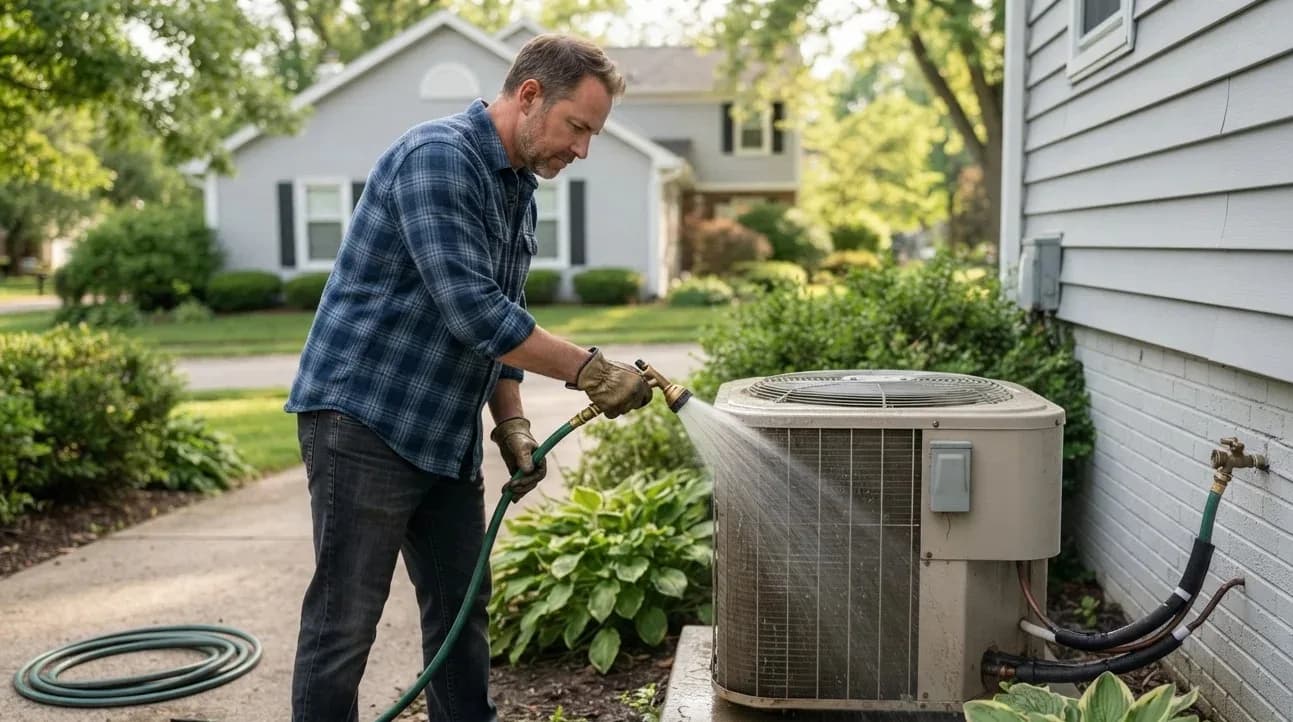
You can clean the coils yourself if your unit allows it and you follow the safety steps. Always turn off the power first. Use gentle cleaning methods to avoid bending the fins.
See How to Clean AC Condenser Coils Safely for the complete procedure.
Check and Straighten the Outdoor Unit's Fins
The thin metal fins that encase an outdoor condenser can be bent by lawn equipment, debris, or by accidentally touching them. If fins are severely damaged, they may decrease the airflow through the coil.
The fins can be visually inspected during routine maintenance. If only a small area is bent, an HVAC fin comb may help straighten it gently. Never force the tool through the fins or make extensive repairs. Damaged coils are better evaluated by a professional.
Clear the Condensate Drain Line
Your air conditioner removes moisture from indoor air as it cools your home. That moisture forms into condensation and is typically drained out via a condensate drain line that leads to an external drain.
Algae, mold, dust, and other accumulation can cause restriction over time. A puddle around the indoor unit or a system that performs automatic shutdowns may be a sign of a clogged drain, especially if the system is equipped with a safety float switch.
If your system's manual provides homeowner instructions for cleaning the drain, follow those directions. You can also use a manufacturer-approved cleaning solution according to its instructions. Never make up a chemical mixture or pour unknown chemicals down the drain.
If there is a lot of water leaking or you cannot clear the drain safely, stop immediately. If you are not sure which line is the drain, call an HVAC professional.
Replace Thermostat Batteries
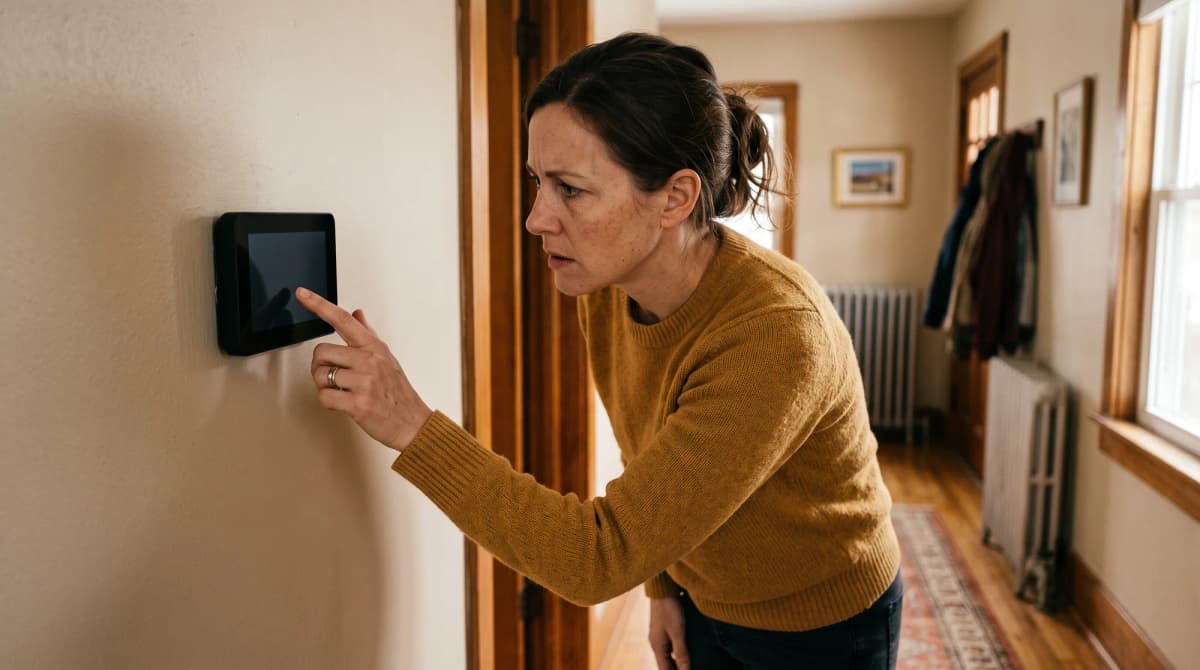
If your thermostat uses replaceable batteries, changing them is one of the simplest maintenance jobs you can do. A weak battery can result in a low light level, loss of display, or poor communication between the display and the HVAC system.
Use the type of battery recommended by the thermostat manufacturer. If the screen is still blank after you install new batteries, there may be a problem. The issue could be with the wiring, system power, or the thermostat itself.
If the display is blank, check out the troubleshooting under Why Does My Thermostat Screen Go Blank?
Vacuum Vents and Registers
Dust can build up on your home's air vents. It can also collect on the return-air grilles. Use a vacuum with a soft brush to remove dust from the vent cover.
The surface can be cleaned with a clean, slightly moistened cloth if needed. Concentrate on the register itself, not just sweeping under the floor. Do not remove the ducts or reach deep inside them when doing regular cleaning.
Keep Indoor Vents Unblocked by Furniture or Rugs
Vents and return grilles must not be blocked to allow proper air circulation. Items such as furniture, rugs, curtains, and storage containers can obstruct the airflow and cause the system to function less efficiently.
Inspect register openings and accessibility throughout the rooms. If possible, push the sofa, cabinet, or rug just a few inches to gain better ventilation. Avoid closing vents as a routine strategy for controlling temperature between rooms.
Tasks You Should Never DIY
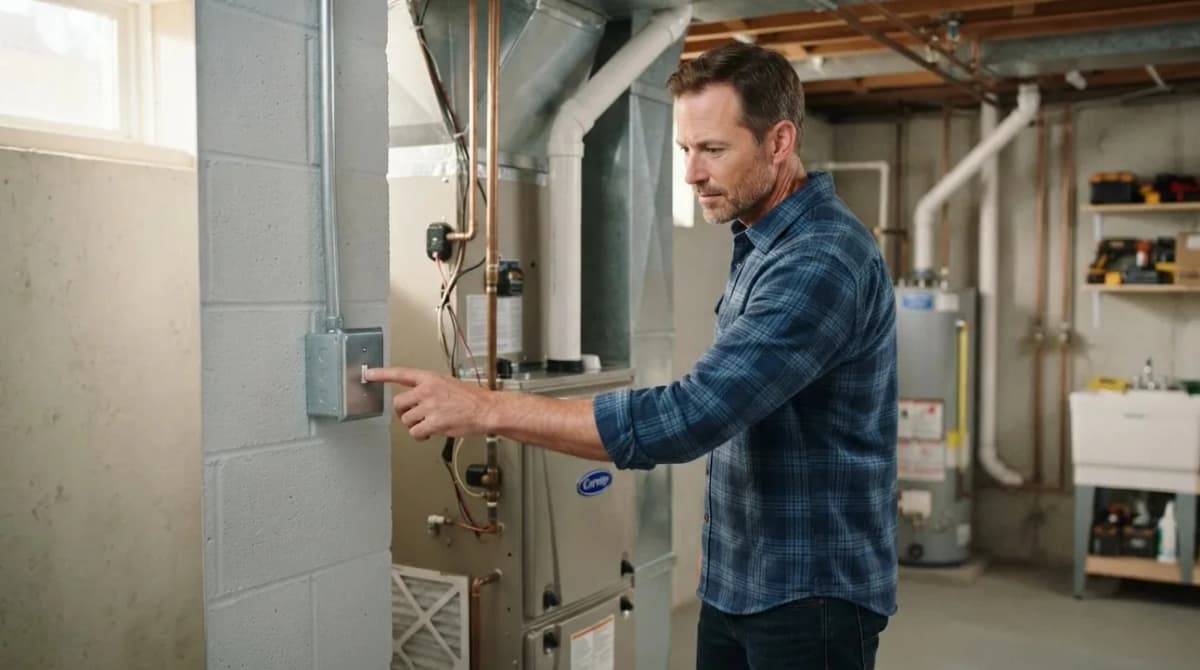
Some HVAC maintenance and repair jobs involve electrical hazards, refrigerant, gas, combustion equipment, internal compressor work, heat exchanger work, or specialized tools. These are not appropriate projects for a homeowner without the required training and equipment.
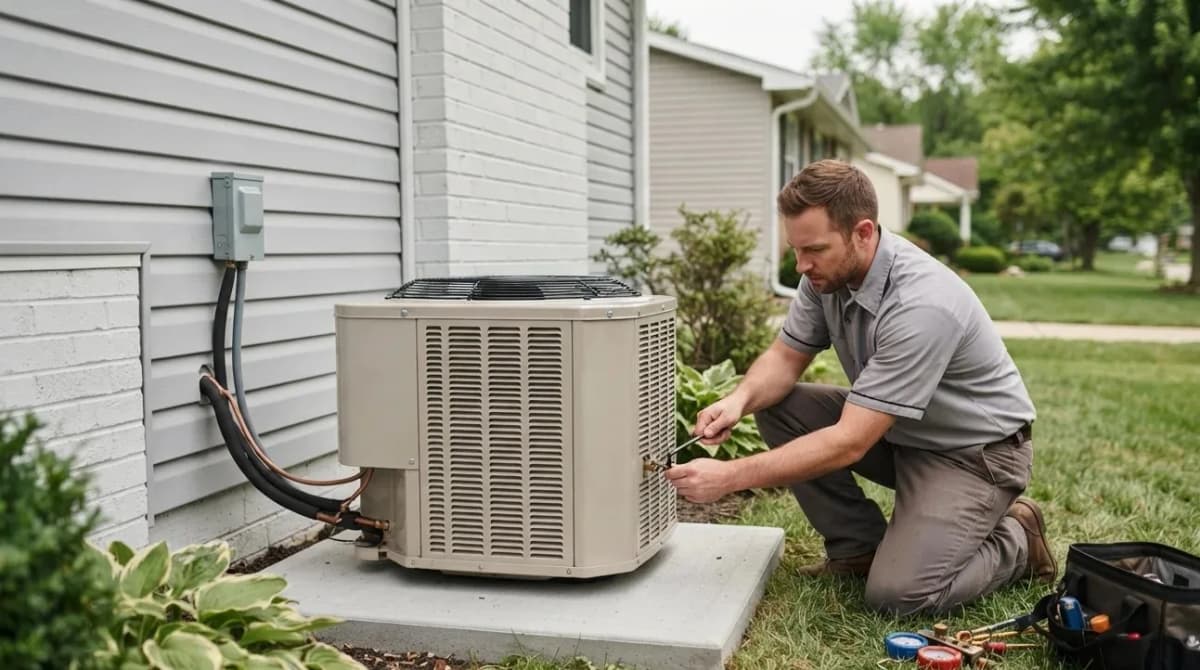
Do not open electrical panels or disconnect any wiring yourself. Also, do not work on refrigerant lines, gas connections, or safety switches. Refrigerant handling is regulated under Section 608 of the Clean Air Act, so refrigerant service is not a DIY task for homeowners and requires the appropriate EPA certification. Do not attempt to diagnose or repair a suspected carbon monoxide problem.
Turn the system off and call a professional if you smell gas or burning. You should also get help if you see damaged wiring, hear strange noises, or the breaker keeps tripping. Don't keep resetting a safety device that keeps tripping.
The fact that the system runs again afterward does not mean the problem is fixed. A safety device that keeps tripping is a sign of a real problem that needs professional attention.
DIY maintenance should keep your HVAC system safe and easy to use. Do not try tasks that require professional training.
How Often to Schedule Professional Maintenance
Self-service maintenance is not a substitute for professional HVAC maintenance. A qualified technician can check parts that homeowners should not open or adjust. They can also find problems early and use special tools for professional maintenance.
A common approach is to schedule professional HVAC maintenance before each season. This means having your heating system checked before winter and your cooling system before summer. Your equipment manufacturer may also have a service plan outlined in the owner's manual.
Professional maintenance can also be important for your warranty. Some manufacturers require proof of professional service or specific maintenance work. Check your warranty terms to see what is required.
Do not try to handle electrical, refrigerant, or combustion work yourself. If your HVAC system needs professional service, use the site's residential AC maintenance page.
Basic Tools Worth Having
Some standard tools will help with routine HVAC maintenance. Always have a flashlight to check filters, vents, and the outdoor unit. A screwdriver can help with simple maintenance tasks. Do not use it to open electrical panels.
You can use a garden hose to clean outdoor coils. Use gentle water pressure to avoid damage. A soft brush, HVAC fin comb, shop vacuum, clean cloth, and spare air filter can also be useful.
Always refer to the owner's manual before operating any tool on the HVAC system. Some HVAC tasks are not safe to do yourself. Call a qualified technician for electrical, refrigerant, or gas-related work.
FAQs
What HVAC maintenance tasks are actually safe for homeowners to do themselves?
Homeowners can safely do many basic HVAC tasks. These include changing air filters, clearing debris, vacuuming vents, checking thermostat batteries, and cleaning the outside of the unit. Electrical repairs, refrigerant work, gas connections, and safety-control repairs should be left to qualified technicians.
How often should professional HVAC maintenance happen if I'm doing basic upkeep myself?
You should do basic HVAC maintenance throughout the year. However, it does not replace professional service. It is common for many homeowners to schedule maintenance for their heating and cooling systems ahead of the peak usage seasons. Always check your equipment manufacturer's recommendations and warranty requirements for the appropriate maintenance schedule.
What basic tools do I need for DIY HVAC maintenance?
You only need a few basic tools for most HVAC maintenance tasks. These include a flashlight, shop vacuum, soft brush, garden hose, fin comb, clean cloth, screwdriver, and spare air filter. These tools should not be used for electrical, refrigerant, gas, or combustion work. Always follow the owner's manual of your HVAC system before beginning any maintenance task.
Can DIY maintenance void my HVAC system's warranty?
DIY maintenance does not always void your HVAC warranty. Warranty rules vary by manufacturer. Some warranties may require specific professional maintenance or documentation. Follow the manufacturer's instructions and maintain records of required services. If you're unsure, check your warranty or ask an HVAC professional before doing the task.