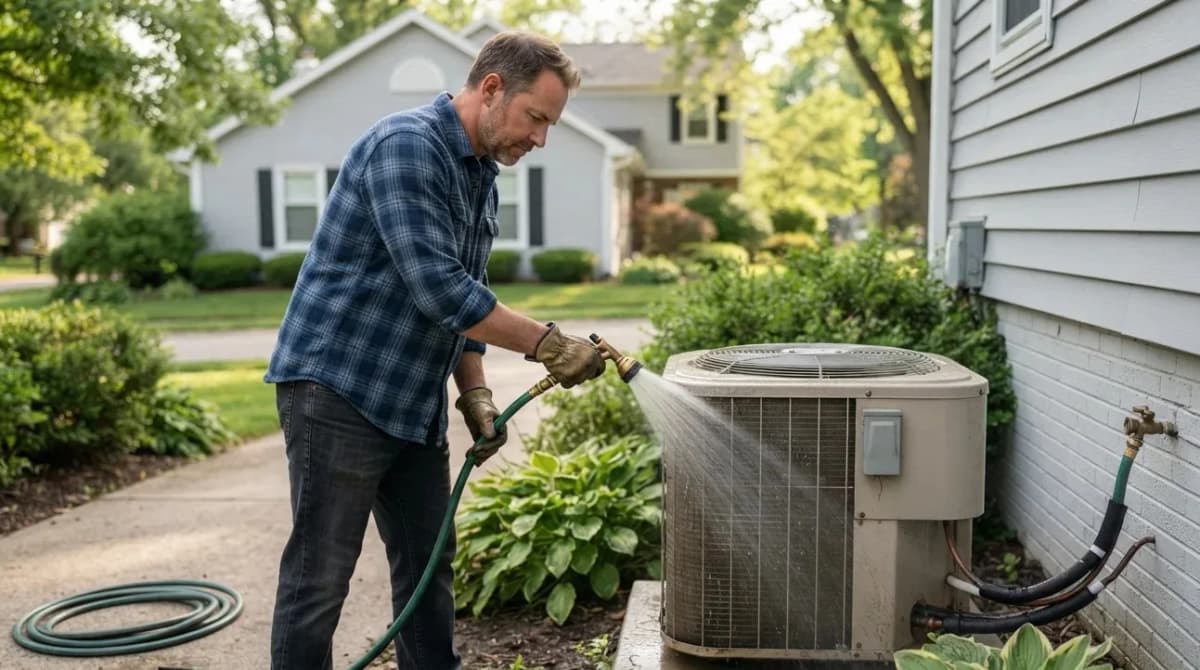

Installing central air conditioning can turn a hot, uncomfortable home into a consistently cool one. In 2026, homeowners can expect to pay around $6,000 to $11,500 for a typical central air conditioning installation, including the equipment and labor. A simple replacement may cost less, while high-efficiency equipment, larger systems, ductwork modifications, or complex installation can push the total cost up to $15,000 or higher.
Cost to Install Central Air Conditioning
The cost to install central air conditioning typically ranges from $6,000 to $11,500 for a typical US home. Other estimates put the broader full-installation range at approximately $5,000 to $12,000, while Bryant gives a wider $3,000 to $15,000 range because project costs vary by home size, efficiency, ductwork condition, and installation complexity.
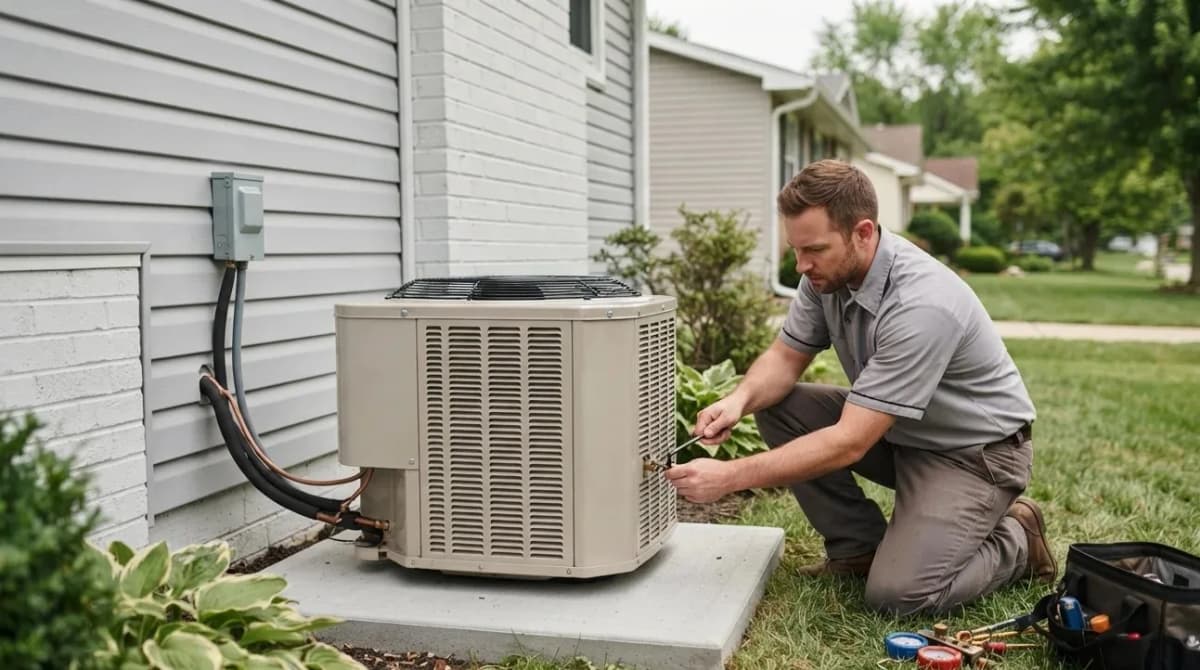
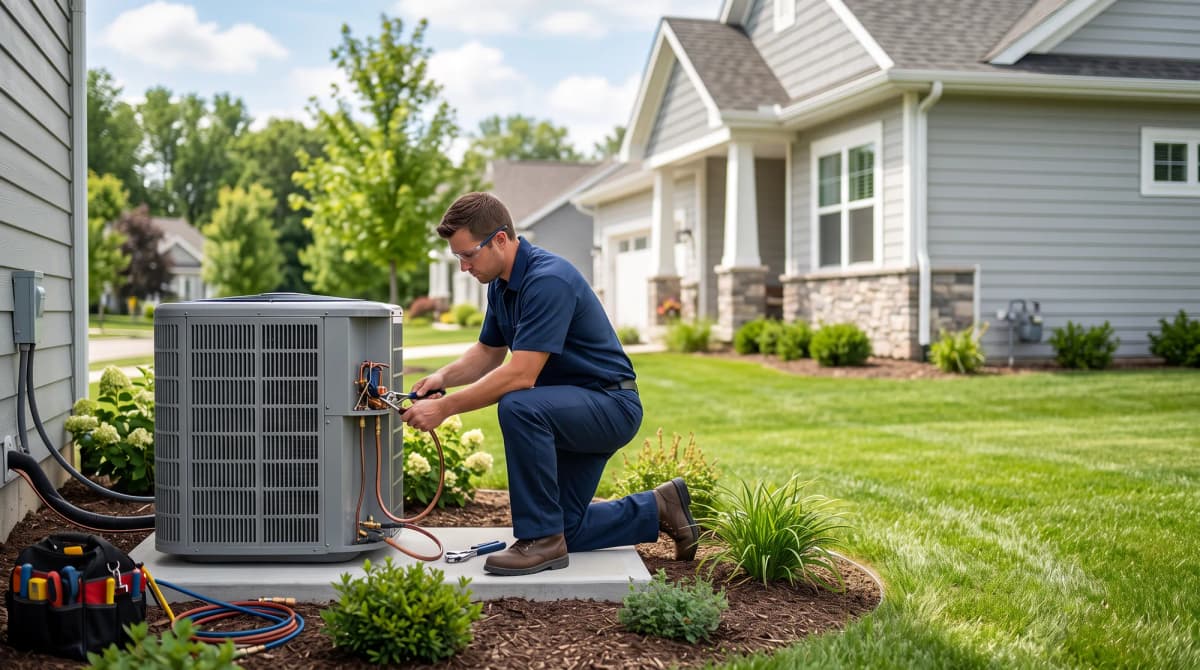
You're not simply paying for an outdoor AC unit. A complete central AC installation can include the outdoor condenser, indoor evaporator coil, refrigerant connections, thermostat, labor, electrical work, permits, and other installation requirements.
Your home's existing infrastructure also matters. If you already have properly sized and usable ductwork, the contractor may be able to use it with the new system. If modifications are required, the total project cost can increase.
iBuyer provides the following comparison:
| Installation scenario | Typical cost |
|---|---|
| Basic AC with existing ductwork | $4,000-$7,000 |
| High-efficiency AC with existing ductwork | $7,000-$10,000 |
| Basic AC without existing ductwork | $6,000-$9,000 |
| High-efficiency AC without existing ductwork | $9,000-$12,000 |
* These figures include the unit, labor, and basic parts, but additional features or modifications can increase the final price.
NerdWallet's current estimate of $6,000 to $11,500 is a useful benchmark for a typical complete installation. Your actual quote could be lower for a straightforward replacement or higher when the home needs additional work.
If you're comparing different air conditioning systems and want a broader overview of equipment and installation costs, see our air conditioner cost guide [internal link].
Central AC Cost by Size
Central air conditioners are sized in tons, with larger systems generally costing more because they provide greater cooling capacity.
However, square footage should not be the only factor in determining system size. A professional HVAC contractor can perform an ACCA Manual J load calculation to determine how much cooling your home actually needs. This considers factors such as insulation, windows, and other home characteristics.
Central AC installation costs can vary significantly by system size and home square footage. The table below combines home-size estimates from Trane with equipment price ranges from Verified HVAC Data to synthesize a single planning guide for understanding how central AC costs can vary by system size.
| System size | Home size | Typical installed cost |
|---|---|---|
| 2 tons | ~1,000-1,500 sq. ft. | $4,000-$7,500 |
| 3 tons | ~1,500-2,000 sq. ft. | $5,000-$9,000 |
| 4 tons | ~2,000-2,500 sq. ft. | $6,500-$11,500 |
| 5 tons | 2,500+ sq. ft. | $7,500-$14,000+ |
*These are planning ranges synthesized from broader current central AC installation estimates. They are not fixed prices for each tonnage. Total project costs vary with efficiency, home size, ductwork, and installation requirements.
A larger home does not automatically need the largest AC system available. Oversizing can affect how frequently the system cycles, while an undersized system may struggle to maintain the desired temperature.
The central air conditioning unit cost is only one part of your final bill. If you're comparing equipment-only prices, don't use those figures as a substitute for a complete installation quote.
For equipment-only pricing by tonnage, see our AC unit cost guide [internal link].
What's Included in Central AC Installation and What Affects Cost?
Your central air conditioning system cost includes more than the equipment itself. Before accepting a quote, confirm exactly what’s included in the contractor’s quote.
System Size
The size of the AC system is one of the biggest pricing factors. For instance, a 2-ton system costs about $1,500-$5,000, while larger 3-, 4-, and 5-ton systems can cost roughly $2,000-$6,800 for the equipment.
Larger systems generally cost more because they provide greater cooling capacity and may require larger or more extensive components. However, the right system size should be based on your home's cooling load, not square footage alone.
A Manual J load calculation considers factors such as insulation, windows, and other home characteristics. Getting the size right matters for both upfront cost and performance.
SEER2 Efficiency
The efficiency rating you choose can also affect your central air conditioning installation cost. SEER2 ratings indicate how efficiently an AC system operates, with minimum ratings currently set at 13.4 SEER2 in northern regions and 14.3 SEER2 in southern areas.
As efficiency increases, so can the upfront equipment cost. For example, a 14 SEER2 unit costs about $1800-$2,800, while an 18 SEER2 model costs around $3200-$4,800.
The higher initial price can be offset by lower energy consumption over time. How much you save depends on your local electricity rate, how many hours a year you run the AC, and how efficient your current unit is, so ask your contractor to estimate savings and payback based on your actual usage.
So, when comparing systems, consider both the upfront equipment cost and the potential reduction in your long-term cooling bills.
Ductwork Condition
Your existing ductwork can affect the total cost of a central AC project. If the ducts are correctly sized and in good condition, you may be able to reuse them. If they have leaks, poor connections, or other problems, you may need repairs or modifications.
For reference, minor ductwork repairs typically cost around $300-$1,000, while installing new ductwork can cost roughly $2000-$7,500, including materials and labor.
That means two homeowners purchasing similar central AC systems can still receive
For a detailed breakdown of ductwork costs, see our ductwork installation and replacement cost guide [internal link].
Labor and Location
Where you live can affect the price of central AC installation.
Labor rates vary between markets, and contractors in major metropolitan areas may charge differently from those in smaller markets. Permit requirements and local installation conditions can also affect the final quote.
NerdWallet reports HVAC installation labor rates of approximately $75 to $250 per hour, although contractors generally provide a total project price rather than simply charging homeowners an hourly rate.
This is why national cost ranges should be treated as budgeting guides rather than guaranteed prices for your home.
Home Size and Layout
Home size affects the cooling capacity required, but insulation and construction quality matter too. Older homes with single-pane windows may need around 400 sq. ft. per ton, while newer, better-insulated homes may need 600 sq. ft. per ton or less. Homes with advanced insulation can require closer to 1,000 sq. ft. per ton.
A two-story home may require a different installation approach from a single-story property. Large windows, high ceilings, difficult equipment access, and other characteristics can also affect the scope of work.
Home size, home age, ductwork, and multiple-story layouts can all contribute to differences in central AC installation costs.
Home Age
Older homes often need extra preparation before a central AC system can be installed, especially if they lack suitable ductwork or need electrical upgrades. Adding central AC to an older home without existing ducts can cost about $6,000–$17,000 or more, compared with roughly $3,000–$7,000 for a standard AC installation
Some homes may not have suitable ductwork, while others may need electrical or infrastructure modifications. This is why two homes with similar square footage can receive very different estimates.
Installing vs. Replacing Central Air: What’s Right For You?
Installing central air for the first time and replacing an existing system are two different projects.
A first-time installation may involve more work if the home does not already have suitable infrastructure. A replacement can be more straightforward when the existing ductwork and other components are compatible with the new system.
For example, iBuyer estimates $4,000 to $7,000 for a basic central AC installation with existing ductwork and $7,000 to $10,000 for a high-efficiency system with existing ductwork.
The final replacement price can increase if the contractor needs to modify existing components, replace refrigerant lines, address electrical issues, repair ductwork, or install a different-size system.
When comparing replacement quotes, check whether the price includes:
- Removal and disposal of the old system
- New indoor and outdoor equipment
- Labor
- Refrigerant line work
- Thermostat
- Required electrical work
- Necessary ductwork modifications
- Permits and inspections
- Startup and testing
- Warranty coverage
If you're replacing an existing AC system, see our AC replacement cost guide [internal link] for a detailed breakdown.
If you're replacing both heating and cooling equipment, that's a broader project. See our HVAC replacement cost guide [internal link] instead.
How to Save on Central AC and Get the Right Quote
Central AC is a significant home improvement expense, but there are ways to manage the project without simply choosing the lowest-priced equipment.
Get Multiple Quotes
Get at least three detailed estimates from qualified HVAC contractors.
Ask each contractor to specify the system size, equipment model, efficiency rating, indoor coil, labor, electrical work, permits, old equipment removal, warranty, and any additional charges.
This lets you compare the scope of work, not just the final dollar amount.
Get the System Properly Sized
Don't automatically choose a larger system because you think more cooling capacity means better performance.
Ask whether the recommended system size is based on a Manual J load calculation. Proper sizing can help prevent you from paying for unnecessary capacity and can support better system performance.
Compare Efficiency Levels
A higher-efficiency system can cost more upfront.
Instead of automatically choosing the highest efficiency available, compare the added cost with your expected energy savings and how long you plan to keep the system.
Check Available Rebates
Before purchasing high-efficiency equipment, check whether your utility company, state, or local programs offer tax credits or rebates. You can also use the Energy Star rebate finder to check for available incentives in your ZIP code.
Eligibility rules and available programs can change, so verify current requirements before including a rebate in your budget.
Plan Before Your Existing System Fails
If your current AC is still working but showing signs of age, start researching replacement options before it fails completely.
Planning ahead gives you time to compare systems and contractors rather than making a rushed decision when you need cooling immediately.
Compare What's Included
When you receive estimates, compare them line by line. Confirm whether labor, permits, thermostat installation, removal, electrical work, and necessary ductwork modifications are included.
A detailed quote makes it easier to identify differences in the scope of work and avoid unexpected charges later.
Review the Warranty
Check both the equipment warranty and the contractor's labor warranty.
A quote with limited warranty coverage may differ significantly from one that includes more comprehensive protection, even when the upfront prices appear similar.
Ask About Potential Additional Costs
Ask what happens if the contractor discovers damaged ductwork, electrical problems, or other issues during installation.
A detailed written estimate should make clear what is included in the quoted price and which conditions could result in additional charges.
Central Air Conditioning Cost FAQs
How much does central air conditioning cost in 2026?
Central air conditioning typically costs $6,000 to $11,500 installed for a typical US home in 2026, including the system and professional installation. Broader estimates range from about $4,000 to $12,000, while complex projects can cost more.
How much does it cost to install central air conditioning?
The cost to install central air conditioning typically ranges from $6,000 to $11,500, including the unit and professional installation. Your final price depends on system size, efficiency, labor rates, existing infrastructure, and installation complexity.
How much does a central air conditioning unit cost?
A central AC unit itself can cost around $2,500 to $4,500, according to NerdWallet. This is the equipment price, not necessarily the total installed project cost. Labor and other installation requirements can increase the final bill.
For equipment-only pricing by system size, see our [AC unit cost guide].
How much does central air conditioning installation cost?
If you're researching the cost of central air conditioning, the final price depends on system size, efficiency, labor rates, existing ductwork, and installation complexity. For a typical US home, a complete central AC installation generally falls within the $6,000 to $11,500 range.
Is it cheaper to install central AC with existing ductwork?
Using suitable existing ductwork can reduce the project scope because you may not need new duct installation. Basic central AC installation costs around $4,000 to $7,000 with existing ductwork, compared with $6,000 to $9,000 without it.
However, the existing ducts must be correctly sized and in good enough condition to reuse.
How long does central AC installation take?
Installation time depends on the scope of the project. A straightforward replacement can be relatively quick, while projects requiring significant modifications or additional infrastructure can take longer.
Ask your contractor for a project timeline as part of the written estimate.
Should I replace my central AC or repair it?
Consider the system's age, condition, repair history, efficiency, and expected remaining life. If you're facing repeated repairs or a major repair bill, getting a replacement estimate can help you compare the cost of continued repairs with a new system.
For detailed replacement costs, see our [AC replacement cost guide].
Sources:
https://www.nerdwallet.com/home-ownership/home-improvement/learn/cost-replace-air-conditioner
https://www.fixr.com/costs/air-conditioner-installation
https://www.bryant.com/en/us/products/hvac-pricing-guide/
https://ibuyer.com/blog/how-much-does-it-cost-to-install-central-ac/
https://www.acca.org/standards/technical-manuals/manual-j
https://verifiedhvacdata.com/costs/ac-replacement-cost/
https://www.angi.com/articles/how-much-does-installing-new-ac-cost.htm
https://www.mysmartclimatesolutions.com/blog/central-air-install-cost-with-no-existing-ductwork
https://www.angi.com/articles/ductwork-installation-cost.htm
https://www.trane.com/residential/en/resources/blog/how-many-tons-should-my-central-ac-unit-be/
https://www.angi.com/articles/3-tips-consider-adding-ac-home.htm